

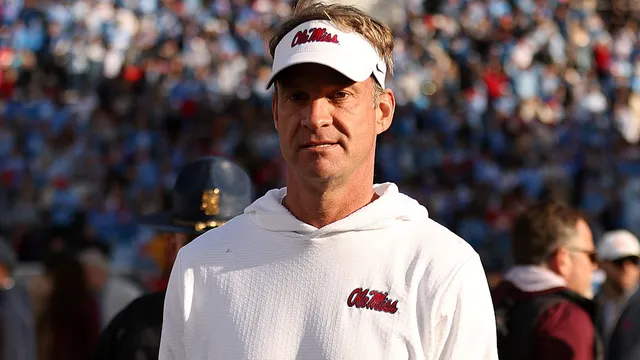
Lane Kiffin leaves Ole Miss for LSU amid playoff contention
Lane Kiffin leaves Ole Miss for LSU amid playoff contention
- Lane Kiffin announced his move to LSU just days after leading Ole Miss to their first College Football Playoff berth.
- Ole Miss has appointed Pete Golding as the new head coach following Kiffin's departure.
- Kiffin's decision to leave during a playoff run has sparked conversation about loyalty and coaching dynamics in college football.
Story
In a surprising turn of events, Lane Kiffin, fresh off leading Ole Miss to its inaugural College Football Playoff berth, announced his departure from the Rebels to take over as head coach at LSU. This decision, which transpired just days after the Rebels clinched a playoff spot, has stirred significant discussion in the college football community. Ole Miss's athletic director Keith Carter confirmed the news shortly after a team meeting where Kiffin informed the players of his decision. The former Ole Miss coach cited the refusal of the Ole Miss administration to allow him to coach through the playoffs as a key reason for his decision. With a notable record of 55 wins over six seasons at Ole Miss, Kiffin has garnered attention for his coaching style and ability to enhance team performance, making his switch to a rival SEC school noteworthy. LSU, having recently parted ways with Brian Kelly, extended an offer believed to be a seven-year, $100 million contract to Kiffin. This offer presented a lucrative opportunity for Kiffin, who had been speculated to be in high demand around the college football circuit, including a potential role at Florida. As Kiffin transitions to leading the Tigers, he takes on the challenge of meeting the high expectations that come with the program's history of success. In contrast, Ole Miss has appointed Pete Golding as their new head coach, emphasizing their commitment to continue their playoff push. Golding, who was an assistant at Alabama, faces the immediate task of rallying the Rebels for their upcoming playoff game as they aim for a national title amidst a tumultuous shake-up in coaching. Kiffin's departure marks a rare occurrence in college football, where a head coach leaves a team contending for a national championship to join a rival team. His exit raises questions about player loyalty and the shifting landscape of college coaching dynamics. The ramifications of these coaching changes will be closely monitored as the College Football Playoff unfolds and the next season begins, with Kiffin now set on making his mark at LSU after leaving behind a successful chapter at Ole Miss.
Context
Coaching changes in college football can significantly impact team performance, recruitment, and overall program success. When a college football team undergoes a coaching change, it often leads to a shift in the team's culture, strategy, and morale. New coaches bring their own philosophies, training techniques, and ways of building teamwork. These changes can yield immediate results on the field, with a new coaching staff typically motivating players to perform at higher levels initially due to renewed hope and excitement. Conversely, this transition can also lead to challenges, such as the need for players to adapt to different systems and the uncertainty that accompanies changes in leadership. Teams that manage these transitions effectively tend to see improved performance, while those that struggle may experience a decline in results during the adjustment period. Recruitment is another critical factor influenced by coaching changes. A new head coach often means a fresh approach to attracting talent. Coaches carry reputations that can enhance or hinder a program's ability to recruit top players. A positive reputation in terms of player development and winning games can draw high school prospects, while a controversial or underperforming coach can drive recruits away. Additionally, coaching changes can lead to shifts in recruitment strategies, as new coaches might prioritize different skills or player types that better fit their systems. The immediate aftermath of a coaching change is crucial, as teams strive to solidify commitments from incoming recruits and retain current players, all of which can significantly impact future success. Moreover, the timing of coaching changes plays a vital role in shaping a program's trajectory. Changes made during or just after the season can create disruptions that might affect a team’s performance in bowl games or playoffs. Conversely, off-season changes allow for a more structured transition, providing coaches the opportunity to implement their philosophies fully before the next season begins. Successful programs know the importance of timing when making these critical decisions, as they can either enhance a program’s long-term prospects or lead to setbacks. In conclusion, the impact of coaching changes in college football is multifaceted, affecting not just immediate game outcomes but also the long-term viability of a football program. These changes influence team dynamics, recruitment efforts, and the overall stability of programs. Schools must carefully consider the timing and implications of these coaching transitions to maximize their chances of success on the field and in recruiting future talent. As college football continues to evolve, understanding the dynamics of coaching changes will remain essential for stakeholders aiming for sustainable success in this highly competitive arena.


