
politics
controversial
impactful

Canadian company cancels sale of warehouse to ICE amid protests

Jan 30, 2026, 11:51 PM40
(Update: Feb 3, 2026, 7:00 AM)
citizens and nationals of Canada
state of the United States of America
United States federal department

Canadian company cancels sale of warehouse to ICE amid protests

  • A Canadian company, Jim Pattison Developments, has canceled a planned sale of a Virginia warehouse to the U.S. Department of Homeland Security.
  • The transaction drew criticism amid rising tensions over immigration enforcement and a series of violent incidents involving federal agents.
  • The decision indicates the growing impact of public sentiment on corporate dealings with controversial government agencies.
Share your opinion
4

Story

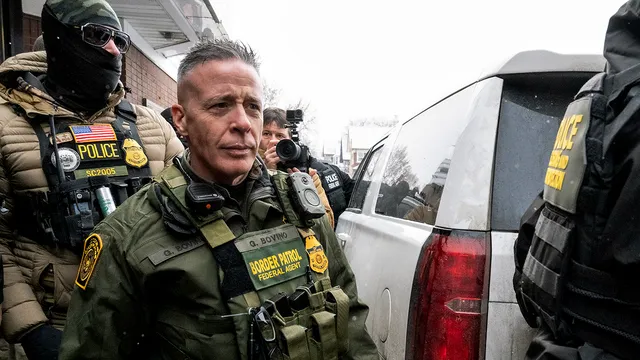
In Vancouver, Canada, Jim Pattison Developments announced on a Friday that it will not proceed with the sale of a warehouse in Ashland, Virginia, to the U.S. Department of Homeland Security. The intended sale drew significant backlash due to its association with the agency's Immigration and Customs Enforcement operations. The 550,000 square-foot facility was to be converted into a holding and processing site for immigrants, which faced intense public scrutiny during an immigration crackdown in the United States. This was exacerbated by recent violent incidents involving federal agents, leading to protests against the agency's practices. The decision to cancel the sale came after the company faced pressure from various groups. The Hanover County Board, where the warehouse is located, received numerous communications from residents opposing the sale. A local protest was even planned outside the company’s headquarters in Vancouver. Beyond just local reactions, a digital media agency, Point Blank Creative Inc., also expressed its discontent by suspending business relationships with Jim Pattison Group, emphasizing their commitment to human rights and social justice. Point Blank had invested a significant sum in advertising with Pattison companies, showcasing the financial repercussions of the public's stance against the sale. This broader movement against ICE has seen similar actions from firms connected to the agency, reflecting a trend of increasing scrutiny on corporate collaboration with controversial government practices. Capgemini, a French technology firm, also announced its intention to divest its U.S. subsidiary due to backlash against contracts with ICE. These actions illustrate a growing discontent regarding the U.S. immigration enforcement methods that have sparked protests and political outrage, particularly following fatal incidents involving ICE agents. As the public discourse around immigration enforcement becomes increasingly charged, companies like Jim Pattison Developments and Capgemini are re-evaluating their business operations and corporate ethics. The pressure from citizens and advocates has highlighted a significant connection between corporate practices and government policies that have far-reaching social implications. The cancellation of the warehouse sale signals a potential turning point for business engagement with controversial government activities and indicates that corporate responsibility is becoming a more critical consideration in the context of civil rights and social justice movements.

Context

The controversies surrounding ICE (Immigration and Customs Enforcement) immigration enforcement have become a focal point of debate in the United States, particularly as discussions of immigration policy and practice continue to evolve. Established in 2003, ICE is responsible for enforcing immigration laws and facilitating the removal of undocumented individuals. Over the years, the agency's actions have drawn significant public scrutiny and criticism, particularly related to its operational tactics, treatment of detainees, and impact on communities. Critics argue that ICE's enforcement methods are often characterized by aggression, leading to heightened fear within immigrant communities, which can discourage individuals from reporting crimes or cooperating with law enforcement. One major area of controversy surrounds the enforcement of immigration laws in sensitive locations, such as schools, hospitals, and places of worship. Many advocates argue that ICE's presence in these areas can create an environment of fear that not only endangers undocumented immigrants but also their American citizen family members. Community backlash against ICE actions has led to protests, policy changes at local levels, and calls for the abolishment or significant reform of the agency as a whole. Moreover, the practice of detaining individuals, sometimes for prolonged periods, in facilities that lack proper oversight has raised serious human rights concerns. Reports of inhumane treatment and inadequate living conditions within these facilities further fuel criticism of ICE. The intersection of local law enforcement and ICE's immigration enforcement has also generated controversy. The implementation of 287(g) agreements allows local police to collaborate with ICE agents to enforce immigration laws. While some argue that this cooperation is necessary for maintaining public safety, others contend that it fosters an atmosphere of distrust between law enforcement and immigrant communities, leading to underreporting of crime and a decrease in community cooperation. The divisions within public opinion regarding the appropriate role of ICE in immigration enforcement reflect broader societal divides on immigration itself, influencing political discourse and policy-making at multiple levels. As debates over immigration continue in the U.S., the actions and policies of ICE remain at the center of discussions concerning ethics, public safety, and human rights. Efforts to reform ICE face both support and opposition from a range of stakeholders, including lawmakers, advocacy groups, and the general public. Moving forward, the resolution of these controversies requires careful consideration of the balance between the enforcement of U.S. immigration laws and the protection of fundamental human rights for all individuals, regardless of their immigration status.

2026 All rights reserved
