

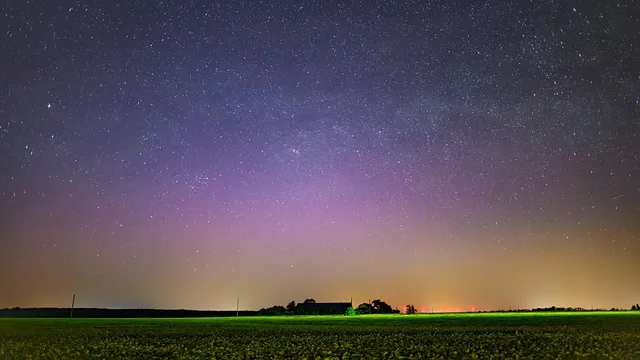
Northern lights expected to illuminate skies in Germany this weekend
Northern lights expected to illuminate skies in Germany this weekend
- A G3 geomagnetic storm is forecasted, which may allow for visibility of the northern lights in Germany.
- The storm is expected to occur during the night of June 5 to 6, 2026, with minimal cloud cover enhancing visibility.
- This event has generated excitement among the public and astronomy enthusiasts, marking a rare opportunity to witness the aurora borealis.
Story
In early June 2026, a significant solar storm was forecasted by the US National Oceanic and Atmospheric Administration (NOAA), which predicted that the northern lights, or aurora borealis, could be visible in various regions, including Germany. The storm was classified as a G3 level, indicating strong geomagnetic activity, with potential peaks reaching G4, which is considered severe. This geomagnetic storm was expected to affect not only North America but also parts of Europe, particularly northern Germany and coastal areas, during the night of June 5 to 6. The last notable occurrence of the northern lights in Germany was in January, making this event particularly anticipated. The NOAA's warning highlighted that the auroras could be seen due to minimal cloud cover expected on the night of the event, enhancing the chances for observers to witness this natural phenomenon. The auroras are caused by disturbances in the Earth's magnetic field due to solar activity, resulting in colorful displays of light in the sky. While the northern lights are often best viewed with the aid of cameras or smartphones, as they can capture more detail than the human eye, the event also raised concerns about the potential dangers of solar storms. In 2022, for instance, a solar storm caused significant disruptions, leading to the loss of 40 satellites from Elon Musk's Starlink network. Such storms can impact navigation, communication, and various essential services, although these disruptions are relatively rare. The upcoming solar storm and the potential visibility of the auroras in Germany have sparked excitement among astronomy enthusiasts and the general public alike, as they prepare for a spectacular display in the night sky.


