

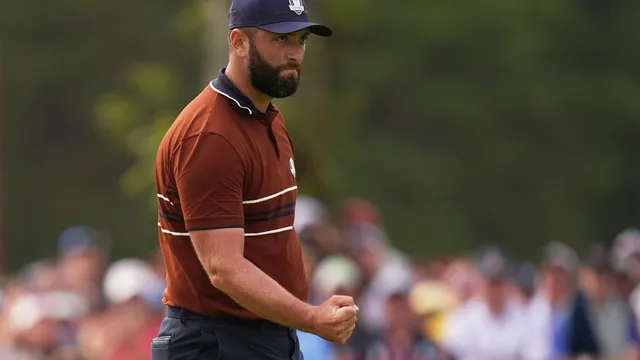
Jon Rahm accuses DP World Tour of extorting players over event requirements
Jon Rahm accuses DP World Tour of extorting players over event requirements
- Jon Rahm publicly criticized the DP World Tour, stating they are imposing unfair conditions on players who have participated in LIV Golf events.
- The terms of the deal involve penalties for not complying and require players to participate in a minimum of six DP World Tour events.
- Rahm's rejection of this deal could jeopardize his eligibility for the Ryder Cup next year, intensifying players' concerns about their freedom to choose where to compete.
Story
In response to ongoing disputes with the DP World Tour, Jon Rahm criticized the organization's new deal requiring players who participate in LIV Golf events to compete in at least six DP World Tour tournaments, specifying that two of these events must be of the Tour's choice. Rahm, a Spanish golfer known for his dual membership with both the PGA Tour and DP World Tour, expressed dissatisfaction with this mandate, stating it restricts players' freedom to choose where to compete and feels like extortion rather than a fair agreement. His stance has raised concerns about his eligibility for the upcoming Ryder Cup, where he has been a key player since 2018. The implications of this deal are significant, as disciplinary actions against members who violate these terms continue, and Rahm’s failure to comply could lead to a suspension from the Ryder Cup team in the upcoming year, putting at risk his longstanding participation. Despite his refusal to adhere to the six-event requirement, Rahm has indicated willingness to negotiate if the conditions were more favorable, specifically suggesting a reduction to four required events. Nevertheless, the DP World Tour has yet to accept his proposal, demonstrating the ongoing tensions between players and the organization, especially in light of changes brought on by the acceptance of LIV Golf within the professional golf ranking system. Rahm's refusal marks a pivotal moment in his career and highlights broader issues of player rights and organizational governance in professional golf.
Context
The LIV Golf series has dramatically shaken the foundations of professional golf since its inception. With substantial financial backing, primarily from Saudi Arabia's Public Investment Fund, LIV Golf has attracted a number of high-profile players from the traditional PGA Tour, offering them lucrative contracts that have set a new precedent in the sport. This influx of capital has raised questions about the sustainability of the sport, as well as its values, and has triggered a broader discussion about the role of wealth in professional athletics. The result has been a heightened competitive tension between the established tours and LIV Golf, with implications that could reshape the future of the game. The impact of LIV Golf extends beyond mere financial incentives; it has also influenced the structure of tournaments and the nature of competition itself. Traditionalists argue that the concepts of loyalty and legacy are being undermined as players make choices based on monetary compensation rather than a commitment to a particular tour or series of events. However, the introduction of the LIV Golf format, which emphasizes team play and a shorter, more compelling schedule, has attracted a younger audience and revitalized interest in golf for some demographics. This shift in viewer engagement has forced existing tours like the PGA to reconsider scheduling, prize distribution, and how they present their product to fans. Critically, the LIV Golf series has also sparked legal disputes and moral debates within the golfing community. Players who made the switch to LIV have faced backlash, criticism, and even suspensions from the PGA Tour, compounding the friction within professional golf. This schism has led to broader conversations around the ethics of sports investments from nations with controversial human rights records, with many organizations and individuals wrestling with their principles in the pursuit of success and recognition in the sport. As of March 2026, the repercussions of LIV Golf on professional golf are still unfolding, paving the way for transformative changes in the sport's landscape. The PGA Tour and its affiliates are responding with counter-measures, enhancing prize funds, and creating incentives to retain top talent. The future relationship between LIV Golf and traditional tours, along with their respective roles in nurturing the game, remains to be seen. Ultimately, LIV Golf has not only influenced the economics of golf but has also prompted fundamental questions about the direction and ethical considerations of professional sports in the modern age.


