

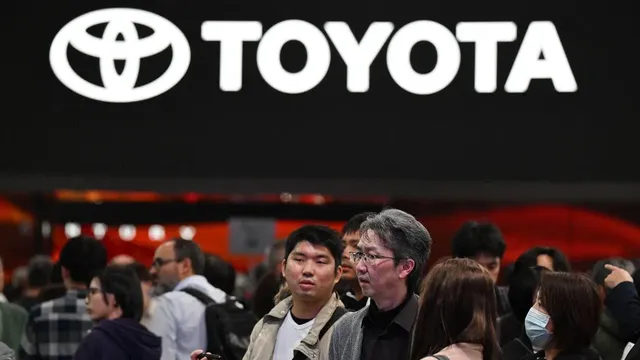
Toyota commits $13 billion to boost U.S. manufacturing efforts
Toyota commits $13 billion to boost U.S. manufacturing efforts
- Toyota confirmed plans to invest up to $10 billion in U.S. operations over the next five years.
- The announcement aligns with the opening of a $13.9 billion battery plant in North Carolina.
- This investment represents a significant commitment to U.S. manufacturing and aims to enhance the company's local production capabilities.
Story
In November 2025, Toyota Motor Corporation confirmed its commitment to invest as much as $10 billion over the upcoming five years into its operations within the United States, aiming to enhance local production and support future mobility initiatives. This announcement followed U.S. President Donald Trump's earlier assertion that Toyota was planning significant investments in U.S. manufacturing, indicating a proactive response to political pressure to shift more manufacturing stateside. The timing of the announcement coincided with the opening of a new lithium-ion battery manufacturing facility in North Carolina, constructed at a cost of $13.9 billion. The North Carolina battery plant is anticipated to play a vital role in supplying batteries for both hybrid and fully electric vehicles, as Toyota ramps up its efforts to meet growing consumer demand for electric vehicles (EVs). With the manufacturing sector under scrutiny for its reliance on foreign production, the company aims to establish a more robust presence in the U.S. market. Ted Ogawa, the top executive for Toyota in the U.S., emphasized that this investment marks a pivotal moment for the company and underlies its commitment to long-term growth in sustainable vehicle production. Toyota has notably spent over $50 billion in the U.S. since its initial investments nearly seven decades ago. By 2025, the company had fulfilled an earlier promise to invest $13 billion in its U.S. operations to counteract criticism related to its import practices and the expansion of production facilities in Mexico. The new battery facility is expected to create approximately 5,100 new jobs and respond to the evolving market landscape as government policies encourage the adoption of zero-emission vehicles. Although demand for EVs showed signs of increasing at the time, uncertainties about market conditions led Toyota to recalibrate its ambitions concerning electric vehicle production. This manufacturing facility will include 14 production lines, focusing significantly on both plug-in hybrid and all-electric models, with projections for ramping up production to meet future demands. Despite the optimism regarding electric vehicle sales and production, recent forecasts indicate a potential oversupply in battery cell manufacturing capacity by 2030, presenting challenges for sustained growth in the sector. As of 2024, Toyota's sales of all-electric vehicles have been relatively low, amounting to fewer than 30,000 units, compared to stronger performances in hybrid vehicle sales, highlighting the diverse strategies necessary for navigating an evolving automotive marketplace.
Context
The impact of US manufacturing investments by foreign companies has gained significant attention in recent years, particularly as globalization continues to shape the economic landscape. Foreign direct investment (FDI) in the US manufacturing sector has grown, bringing with it both opportunities and challenges for the local economy. As foreign companies establish or expand their operations in the US, they contribute to job creation, technology transfer, and enhancement of production capabilities. These investments not only stimulate economic growth but also reinforce the US's position as a dominant player in the global manufacturing arena. However, it is essential to analyze the multifaceted effects of these investments to fully understand their overall impact. A key benefit of foreign manufacturing investments is the creation of jobs across various skill levels and sectors. When foreign companies open manufacturing plants, they typically hire a diverse workforce, which in turn boosts local economies. This job creation can significantly reduce unemployment rates in affected areas, leading to an increase in consumer spending and improved living standards. Additionally, these companies often bring advanced technologies and efficient production practices, raising the overall productivity of the manufacturing sector. This influx of capital fosters innovation and competition among domestic firms, driving them to adopt new technologies and enhance their operational efficiencies. While the benefits are noteworthy, there are also potential drawbacks to consider. The rise of foreign manufacturing investments may lead to job displacement in some cases, as local companies face heightened competition. In some instances, domestic firms might struggle to compete with the scale and resources of foreign entities, leading to business closures or downsizing. Furthermore, there are concerns regarding the potential outflow of profits back to the foreign parent companies, which might limit the local economic benefits. Policymakers must strike a balance between attracting foreign investments and protecting domestic industries to ensure sustainable economic growth. Ultimately, the impact of US manufacturing investments by foreign companies is a complex issue that requires careful consideration of both positive and negative aspects. As foreign investments continue to shape the manufacturing landscape, it will be crucial for stakeholders, including government, industry leaders, and labor representatives, to collaborate in developing policies that maximize the benefits of these investments while mitigating potential drawbacks. Promoting a conducive environment for both foreign and domestic investments will be key to sustaining the US manufacturing sector's competitiveness in the global market.


