

Eric Berger recalls a historic rocket launch nearly 50 years later
Eric Berger recalls a historic rocket launch nearly 50 years later
- Eric Berger shared his personal experiences of witnessing several rocket launches.
- He highlighted a memorable event nearly 50 years ago that continues to resonate with him.
- These reflections emphasize the emotional significance of space exploration in personal and collective history.
Story
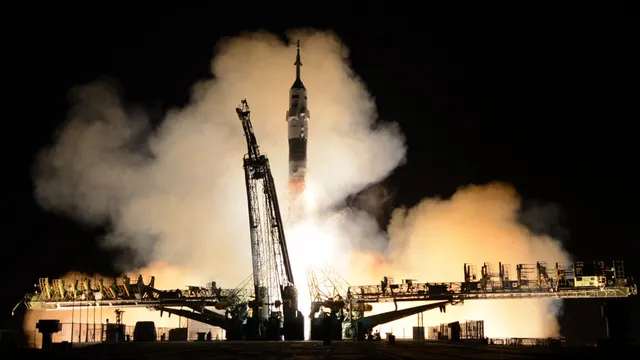
In a reflection on past rocket launches, Eric Berger recounts his experiences of witnessing several significant events in space history. One notable moment occurred nearly 50 years ago when he attended a rocket launch that left a lasting impression on him, highlighting the emotional connection many feel towards space exploration. The lead-up to this experience included a series of private tours at NASA's Kennedy Space Center in Florida, where visitors were given exclusive access to notable locations used for historic launches. As the day of the launch approached, guests were transported to the Banana Creek viewing area, providing a spectacular vantage point for witnessing the event. As the rocket ascended, Berger experienced a mix of excitement and nostalgia, recalling how the light of the shuttle breaking through cloud cover reminded him of similar events from his childhood. Such experiences are significant milestones that contribute to personal memories and inspire awe in the infinite possibilities of space travel. Berger’s favorite launch, however, was notably smaller but deeply memorable; in 2014, he watched a Soyuz FG rocket's night launch from an observation point close to the pad that launched the very first spacecraft, Sputnik. His account includes a memorable story about a vibrant memory involving the Space Shuttle Discovery, which soared high into a sunrise during its launch. Taking place in Cape Canaveral, Florida, this distinct launch stood out in his mind, particularly due to the unique atmospheric phenomenon it created. He reminisced about the impact of the first space shuttle launch he personally witnessed, considering how such events mark crucial moments in both personal and collective histories within the space community. Overall, these experiences illustrate the significant relationship that individuals can form with space exploration and the profound impact that rocket launches hold for those fortunate enough to witness them. The legacy of each mission contributes to ongoing engagement with the idea of exploring beyond our planet, fostering a culture of excitement and curiosity towards future ventures in the cosmos.
Context
The history of rocket launches in the USA is marked by significant milestones that have shaped the field of aerospace engineering and exploration. Beginning in the early 20th century, the foundations of rocketry were laid by pioneers such as Robert H. Goddard, who in 1926 conducted the first successful flight of a liquid-fueled rocket in Auburn, Massachusetts. This achievement was crucial, demonstrating the viability of rocket propulsion, although it garnered little attention at the time. The efforts of Goddard and other early enthusiasts set the stage for later developments that would have profound implications for both military and civilian aerospace initiatives. The onset of World War II spurred rapid advancements in rocket technology, primarily driven by military needs. The German V-2 rocket, developed by Wernher von Braun, illustrated the potential of ballistic missiles, which led to significant interest in similar technologies in the United States. Following the war, many German scientists, including von Braun, were brought to America through Operation Paperclip, contributing to the U.S. rocket program. The culmination of these efforts was evident with the launch of the first American satellite, Explorer 1, in 1958, during the space race era that was marked by competition with the Soviet Union. The late 1950s and 1960s saw a rapid expansion of the U.S. space program, driven by the National Aeronautics and Space Administration (NASA), which was established in 1958. This era is notable for ambitious missions including Project Mercury, which successfully placed the first American astronauts into orbit, and the Gemini missions that followed, paving the way for the historic Apollo Program. Apollo 11's successful landing on the Moon in 1969 remains one of the most celebrated achievements in human history and exemplifies the technical prowess and driving spirit of American rocketry. In the ensuing decades, the focus of U.S. rocket launches transitioned from lunar exploration to deploying satellites, space station missions, and interplanetary exploration. The Space Shuttle program, initiated in 1981, allowed for the reusable launch of payloads and human exploration, significantly advancing space science and technology. More recently, private companies like SpaceX and Blue Origin have entered the field, revolutionizing rocket launches with cost-effective solutions and reusability. As of 2026, the United States continues to lead in many aspects of space exploration with endeavors aimed at returning humans to the Moon and plans for future missions to Mars. This ongoing evolution reflects a history of innovation, collaboration, and the relentless pursuit of knowledge beyond our planet.


