

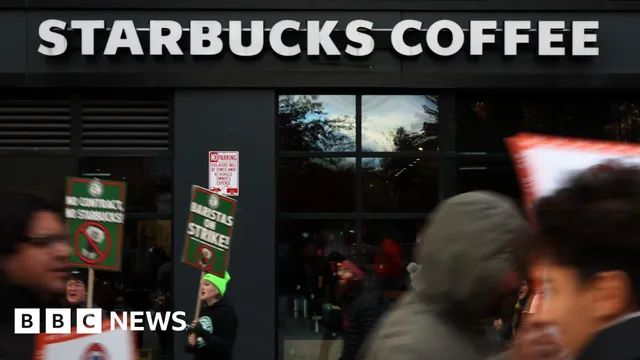
Starbucks pays $35 million to settle major labor law violations in NYC
Starbucks pays $35 million to settle major labor law violations in NYC
- An investigation into Starbucks initiated by New York City officials found over 500,000 violations of labor laws since 2021.
- The city’s settlement includes $35 million paid to workers and $3.4 million in civil penalties.
- This agreement marks a significant step towards ensuring worker rights and stable employment conditions in New York City.
Story
In New York City, Starbucks has reached a significant settlement involving a payment of about $35 million to over 15,000 of its hourly workers. This agreement was triggered by allegations that the coffee chain had failed to provide stable work schedules and had arbitrarily reduced employees' hours since 2021. An investigation by the city's Department of Consumer and Worker Protection (DCWP) revealed that Starbucks violated the city's Fair Workweek Law more than half a million times, severely impacting workers' ability to plan their personal and financial lives. Under the terms of the settlement, affected employees who worked from July 2021 to July 2024 will receive approximately $50 for each week worked during that period. Additionally, Starbucks will incur $3.4 million in civil penalties as part of the agreement while committing to future compliance with the city’s labor laws. New York City officials have termed this settlement as the largest worker protection settlement in the city's history, reflecting the seriousness of the labor violations that occurred. Starbucks has expressed its commitment to compliance but acknowledged the complexities of the local laws, underscoring that challenges in managing such regulations extend to many retailers operating in the city. Meanwhile, the union representing Starbucks workers, Starbucks Workers United, is involved in ongoing tensions with the company, demanding better pay, staffing, and conditions amid various strikes across the nation. As this settlement unfolds, it demonstrates the vital role that labor protections play in ensuring fairness and dignity for all workers in the often challenging landscape of retail employment.
Context
Worker protections and rights in New York City have been a focal point of labor activism and legislative action over the years, reflecting the city's diverse workforce and the complexities of its labor market. With a substantial population comprised of various ethnicities and backgrounds, New York City is home to many workers who deserve comprehensive protections against exploitation, discrimination, and unsafe working conditions. Laws aimed at safeguarding workers' rights encompass a range of issues, including minimum wage, paid sick leave, health and safety regulations, and protections from discrimination based on race, gender, sexual orientation, and immigration status. The landmark legislation regarding worker protections in New York City includes the New York City Human Rights Law, which prohibits discrimination in employment, housing, and public accommodations. Additionally, the New York City Paid Sick Leave Law requires employers with five or more employees to provide a minimum amount of paid sick leave, thus allowing workers to take necessary time off without fear of losing income. This law is significant for public health, particularly in the context of the ongoing challenges presented by health crises such as the COVID-19 pandemic, ensuring that workers can remain home when ill and, in turn, protect their coworkers and the community at large. Moreover, New York City's labor landscape has adapted over recent years to address the needs of gig economy workers who often lack traditional employment benefits. New measures have sought to improve conditions for these workers, including the Freelance Isn’t Free Act which mandates written contracts and timely payment for freelance work. Additionally, various worker advocacy groups continue to lobby for better protections and rights, emphasizing the need for fair pay and benefits for all workers, regardless of their employment classification. These grassroots movements play a critical role in shaping policy and drawing attention to workplace injustices. Despite the progress that has been made, challenges remain. Many workers, especially those in low-wage positions, frequently face violations of their rights, such as wage theft or unsafe working conditions. Moreover, workers who are undocumented or part of marginalized communities may encounter additional barriers to asserting their rights due to fear of deportation or retaliation. For these reasons, ongoing education and outreach efforts are essential, equipping workers with necessary knowledge about their rights and available resources. In conclusion, while New York City has made significant strides in worker protections, there is a persistent need for vigilance and advocacy to ensure that all workers are treated fairly and justly.


