

Meta blocks access to ICE List, raising accountability concerns
Meta blocks access to ICE List, raising accountability concerns
- Meta has restricted sharing of links to a site listing Department of Homeland Security employees.
- The restriction follows incidents where ICE agents were criticized after the deaths of two U.S. citizens.
- The action raises concerns regarding accountability and freedom of speech.
Story
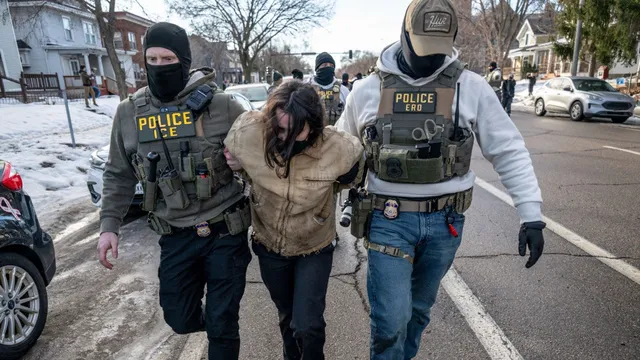
In the United States, Meta, the parent company of Facebook and Instagram, has restricted users from sharing links to a controversial website known as the ICE List. This site claims to document the names and information of employees from the Department of Homeland Security, created as an accountability initiative by Dominick Skinner and his team. The reporting of these restrictions began earlier this week, as volunteers associated with the ICE List reported issues with posting the link on social platforms owned by Meta. This action comes amidst criticism towards ICE agents following incidents involving the deaths of U.S. citizens during enforcement operations. Established in June, the ICE List aims to provide a public and verifiable record of immigration enforcement activities across the nation. Advocates of the site argue that it serves as a vital tool for journalists, researchers, and the general public to hold accountable those involved in immigration enforcement. Dominick Skinner expressed concern over Meta’s decision, suggesting it indicates a broader trend of corporate entities suppressing information linked to governmental accountability. In the aftermath of the recent shootings involving ICE agents, there has been increased scrutiny of their actions, further intensifying calls for transparency. Reacting to the block on its links, the Meta spokesperson stated that the removal of such content aligns with their privacy policy aimed at curbing the distribution of personally identifiable information regarding law enforcement personnel. Skinner's assertion connects Meta's actions to a perceived protection of ICE agents' anonymity, which some critics claim resembles fascist practices in the union of corporate and state power. Critics argue that this approach undermines the public's right to monitor government actions and hold officials accountable, raising significant ethical concerns about freedom of speech and the role of social media in moderating controversial content. With a backdrop of increasing tensions surrounding immigration enforcement, the implications of Meta's actions reveal an ongoing struggle over online content sharing and the balance between privacy and accountability in a digital age.
Context
The impact of social media censorship on accountability is a multifaceted issue that has garnered significant attention in recent years. Social media platforms have emerged as vital tools for communication, activism, and the dissemination of information. However, the increasing trend of censorship—often justified by the need to combat misinformation, hate speech, and harmful content—raises critical questions about transparency and accountability. While the intent behind such censorship may be to create a safer online environment, the implications for public discourse, freedom of expression, and the mechanisms of holding powerful entities accountable are profound. When voices are silenced under the guise of moderation, there is a risk that necessary criticisms and dissenting opinions may be lost, thus undermining the very tenets of a democratic society that relies on open dialogue to function effectively. Furthermore, the question of accountability extends to the platforms themselves; social media companies often operate with considerable autonomy, making decisions about what content is allowed or removed without a standardized or transparent process. This lack of oversight can lead to arbitrary censorship, wherein certain viewpoints may be disproportionately targeted, not necessarily based on objective criteria but rather on subjective interpretations of their content policies. Consequently, this creates a power imbalance where corporations wield significant influence over public narratives, potentially stifling debates that challenge the status quo. Hence, distinguishing between harmful content and legitimate discourse becomes increasingly challenging, positioning these platforms as gatekeepers of information, which complicates accountability. In terms of governmental policies and societal norms, the implications of social media censorship are equally significant. Governments may exploit the regulatory power that social media companies possess, leveraging it to suppress dissent or to control the narrative surrounding sensitive topics. This symbiotic relationship can create an environment where accountability is further eroded, as governmental actions may go unchecked when dissenting voices are suppressed online. Additionally, the global nature of social media complicates accountability mechanisms, as content moderation policies vary widely from one country to another, with some regions leaning towards more authoritarian practices, thereby impacting users' ability to hold their governments accountable through digital platforms. The phenomenon of social media censorship thus poses challenges for public accountability on several levels. Balancing the need for safety and the protection of users from harmful content with the necessity for free expression is a delicate act that demands careful consideration. To foster an environment where accountability thrives, it is crucial to promote transparency in how moderation policies are applied and to ensure that users have avenues for redress when they believe their content has been unjustly removed. Engaging stakeholders—users, platform operators, and lawmakers—in a constructive dialogue about the principles guiding censorship practices can help develop a more responsible framework that recognizes the vital role of social media in fostering accountability while simultaneously addressing the challenges posed by harmful content.


