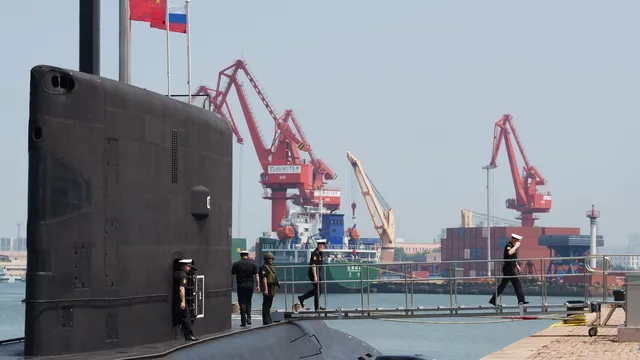
On July 5, 2026, Russian Pacific Fleet warships arrived in the Chinese port of Qingdao to participate in the annual Joint Sea-2026 naval exercises. These exercises, which are set to last nearly a week, involve both Russian and Chinese naval forces conducting a series of operations aimed at enhancing their military cooperation. The drills include search-and-rescue operations, anti-submarine and air defense drills, as well as live-fire artillery exercises. The Defense Ministry in Moscow confirmed the arrival of the vessels and released video footage showing the welcoming ceremony, where sailors from both nations exchanged handshakes and children presented flowers to the visiting crews.
The Ministry of National Defense of China stated that these exercises are part of the annual cooperation plan between the two militaries, designed to address security challenges and maintain regional peace and stability. Following the drills, some forces from both sides are expected to conduct a joint maritime patrol in parts of the Pacific Ocean. This collaboration comes at a time when Russia and China are strengthening their military ties alongside closer political and economic relations. Earlier in the year, Chinese President Xi Jinping hosted Russian President Vladimir Putin in Beijing, where they signed over 40 cooperation agreements covering various sectors, including trade, technology, and media exchanges.
Putin characterized the relationship between Russia and China as having reached an unprecedented level, describing it as a model of genuine comprehensive partnership and strategic cooperation. Xi echoed this sentiment, stating that the ties between the two nations have reached the highest level in history. Additionally, both countries agreed to extend a friendship treaty that was originally signed in 2001, further solidifying their commitment to mutual cooperation.
The Joint Sea-2026 exercises reflect the ongoing trend of military collaboration between Russia and China, which is increasingly seen as a response to shared security concerns in the region. As both nations continue to expand their military capabilities and cooperation, the implications for regional security dynamics and international relations are significant, raising questions about the future of military alliances and geopolitical stability in the Asia-Pacific region.