

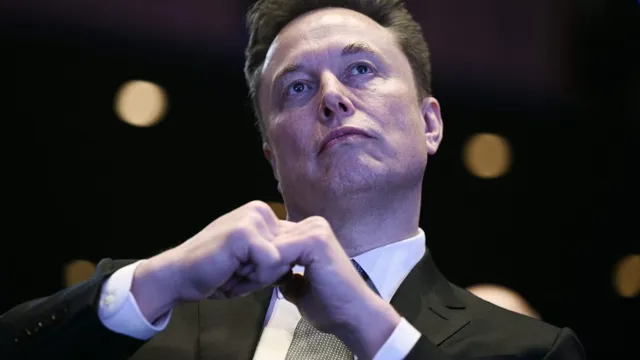
Elon Musk launches ambitious chip project in Texas
Elon Musk launches ambitious chip project in Texas
- Elon Musk announced the Terafab project to manufacture chips for AI and robotics in Austin, Texas.
- The facility aims to produce chips supporting significant computing power for both Earth and space.
- This ambitious project reflects Musk's strategy to secure chip supply as his companies invest more in advanced technologies.
Story
In a significant move towards advancing technology in artificial intelligence and robotics, Elon Musk unveiled plans for the Terafab project, aimed at establishing a new semiconductor manufacturing facility. The announcement was made in downtown Austin, Texas, to an audience that included notable figures such as Governor Greg Abbott. The facility is intended to be equipped with state-of-the-art technology necessary for producing chips of varying kinds, with Musk emphasizing the importance of securing chip production for the operations of his companies, Tesla, SpaceX, and xAI. The Terafab is designed to initially support up to 100 to 200 gigawatts of computing power annually on Earth and aims for a larger capacity of a terawatt in space. This project marks a major shift for Musk, who lacks a background in semiconductor production but has a long-standing vision for technological advancements in AI. While presenting the project, Musk revealed ambitious specifications, including the goal to produce chips at a 2-nanometer scale, which would be groundbreaking in the industry. However, the challenges ahead are substantial, as bringing new semiconductor facilities online typically requires tens of billions of dollars and intricate machinery from multiple sources. Musk previously outlined a vision for the facilities, stating that without the establishment of Terafab, his companies would struggle to obtain the necessary chips. Furthermore, this endeavor aligns with SpaceX’s broader ambitions, which include launching a constellation of satellites designed for complex computational tasks in space. The development of this project also follows Tesla's ongoing work with xAI, a company acquired by SpaceX, reflecting a collaborative approach towards enhancing technological capabilities. This strategic initiative to pursue chip production and AI infrastructure is paralleled by SpaceX's plans for an IPO projected to raise up to $50 billion, as they aim to bolster funding and resources for these expansive projects. The future capabilities of these chips and data centers in space could reshape how companies like Tesla and SpaceX leverage technological innovations for their operational successes.


