

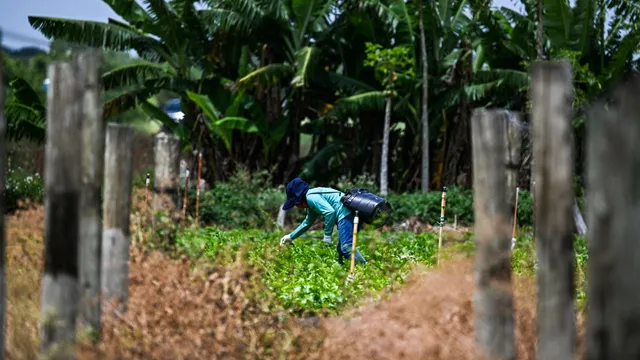
Migrant farmworkers express fear amid rising ICE activity
Migrant farmworkers express fear amid rising ICE activity
- Undocumented migrant farmworkers in California and Oregon report growing anxiety due to ICE activities near homes and workplaces.
- Fears of ICE raids have resulted in labor shortages during crucial harvest seasons in the agricultural sector.
- The situation highlights the urgent need for solutions to support agricultural workers and ensure food production.
Story
Undocumented migrant farmworkers in California and Oregon have shared their escalating anxiety regarding Immigration and Customs Enforcement (ICE) raids in their communities. The fear among these workers is palpable, as many avoid essential outings, such as medical appointments and grocery shopping, due to the constant threat of being targeted by federal agents. These workers have stated that the chilling presence of ICE has not only affected their personal lives but has also contributed to labor shortages in agricultural sectors, particularly during harvest seasons. According to data from the USDA, nearly half of the 2.4 million agricultural workers in the U.S. lack legal immigration status. Amid changes in federal policy during the Trump administration, which have reportedly led to almost 3 million undocumented immigrants leaving the country, the situation remains dire for those still residing in the U.S. Families report that the fear of deportation is affecting their mental health and everyday functioning, fostering a climate of paranoia as they navigate their day-to-day lives. Two workers reported that they had to alter their routines and lessen their family outings to focus on essential tasks only. One highlighted the constant fear of spotting unfamiliar vehicles, worrying they might belong to ICE officials. Such anxiety has permeated the agricultural communities, contributing to a decrease in participation among farmworkers during critical harvest seasons, notably between July and October. The increased fear has led to dire consequences in food production, as crops such as grapes, blueberries, and peaches have been left unharvested due to labor shortages. The federal government has responded by updating the H-2A visa program, allowing employers to hire foreign workers for temporary agricultural jobs when there aren't enough domestic workers. This adjustment aims to address labor shortages amid a growing crisis affecting hardworking individuals whose livelihoods depend on agriculture.
Context
The history of immigration policies under the Trump administration was marked by a significant shift in approach, characterized by a focus on national security and the enforcement of immigration laws. From the outset of his presidency in January 2017, Donald Trump took decisive actions to curb both legal and illegal immigration, with an emphasis on building a wall along the U.S.-Mexico border as a prominent symbol of his agenda. Executive orders initiated restrictions on travel from several predominantly Muslim countries and sought to end the Deferred Action for Childhood Arrivals (DACA) program, which provided protections for individuals brought to the U.S. as children. These policies ignited a national debate over immigration that highlighted deep divisions in public opinion and the effect of these actions on millions of families and communities across the country. One of the most contentious elements of Trump's immigration policy was the implementation of the "zero tolerance" policy in 2018, which led to the separation of families at the border. This policy generated widespread outrage and drew attention to the humanitarian consequences of the administration's hardline stance. The backlash prompted public protests and legal challenges, with advocates arguing that such practices were inhumane and violated basic human rights. Despite these concerns, the Trump administration remained steadfast in its enforcement efforts, touting decreases in illegal border crossings as evidence of their success. Additionally, the Trump administration made significant changes to the legal immigration system. Policy shifts included the introduction of stricter vetting processes for visa applicants and the elimination of certain immigration pathways. Efforts to prioritize skilled migrants over family-based immigration led to controversies and accusations of discrimination. The public charge rule, which aimed to penalize immigrants for using public benefits, was also implemented, which further instilled fear among immigrant communities and had a chilling effect on individuals seeking necessary assistance. Throughout Trump's term, immigration policies were consistently framed within a narrative that emphasized the need for public safety and economic security. This framing was instrumental in rallying support among his base while alienating immigrant advocates and those who viewed these policies as racially and ethically problematic. As a result, the Trump administration's immigration legacy remains a polarizing aspect of contemporary U.S. political discourse, with implications that extend beyond the administration itself.


