

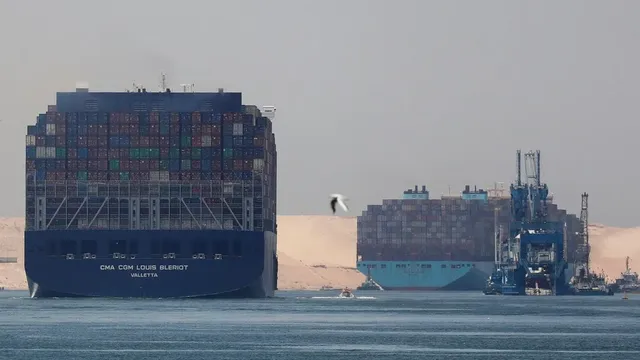
Shipping companies strategize return to Suez Canal after lengthy disruptions
Shipping companies strategize return to Suez Canal after lengthy disruptions
- Major shipping companies have been rerouting vessels through longer routes around Africa since late 2023 due to security threats.
- Maersk is set to resume its service via the Red Sea and Suez Canal for one of its routes, starting January 26, 2026.
- Despite ongoing risks, shipping companies are exploring gradual returns to the Suez Canal while adjusting logistics to manage potential congestion.
Story
In January 2026, major shipping companies began formulating plans to resume operations in the Suez Canal after experiencing over two years of disruptions due to security threats in the Red Sea region. These disruptions primarily stem from attacks on commercial vessels by Yemen's Houthi forces, which occurred in solidarity with the Palestinian cause amidst the ongoing conflict in Gaza. The escalation of these threats led many companies to reroute their vessels around Africa since November 2023, opting for longer and more expensive shipping routes to mitigate the risks associated with the Red Sea. However, the recent ceasefire agreement reached in October 2025 between conflicting parties has sparked renewed interest among shipping companies to return to the Suez Canal. Different companies have adopted varying strategies; for instance, Maersk, the Danish shipping giant, announced plans to resume sailing through the Red Sea and the Suez Canal in January 2026, following successful test runs in the prior months. Notably, Maersk's decision marks the group's gradual reintegration back into the Suez route, which they plan to phase in with a service connecting the Middle East and India to the U.S. east coast starting on January 26. On the other hand, CMA CGM, the third-largest container shipping line globally, has opted against expanding its service plans through the canal due to prevailing uncertainties. Despite having previously commenced naval escort services through the canal and executing two successful transits, the company decided to divert three of its services away from the Suez Canal as a precautionary measure. This reflects the ongoing apprehensions in the shipping industry towards potential risks in the region. German company Hapag-Lloyd has chosen to maintain its current operations in the Red Sea and not alter its logistics plans for the time being. The CEO indicated that any return to Suez would be gradual, predicting a transition period of around 60 to 90 days to make necessary adjustments and avoid port congestion. Additionally, Wallenius Wilhelmsen, a car shipping firm from Norway, is still assessing conditions in the area and will resume operations only when certain safety prerequisites are fulfilled. Collectively, these responses highlight how shipping companies are navigating the complexities of the current geopolitical climate as they seek to reestablish shipping routes vital for international trade.


