

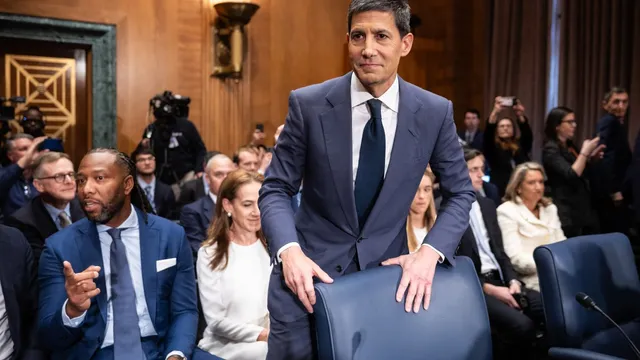
Senate advances Kevin Warsh's nomination to Federal Reserve board
Senate advances Kevin Warsh's nomination to Federal Reserve board
- The Senate has voted to advance Kevin Warsh's nomination to the Federal Reserve Board.
- Democratic Senators John Fetterman and Chris Coons played a pivotal role in this bipartisan support.
- Warsh’s confirmation could significantly influence the Federal Reserve's approach to monetary policy.
Story
In a recent Senate vote, President Donald Trump's nominee Kevin Warsh was advanced with a 49-44 vote. This pivotal decision saw Democratic Senators John Fetterman and Chris Coons breaking ranks to support the nomination alongside their Republican counterparts. As a seasoned policymaker, Warsh’s nomination raises critical discussions surrounding the Federal Reserve's independence, particularly at a time when the central bank is under scrutiny for its monetary policies amid rising inflation and market fluctuations. Warsh, who previously served as a Federal Reserve governor from 2006 to 2011, expressed skepticism regarding the central bank's economic recovery strategies during the financial crisis. His relationships with Wall Street and views on interest rate policies have raised concerns among Democratic senators who argue that his confirmation could lead to increased influence of Trump's policies within the Federal Reserve. Fetterman, in particular, noted that he has voted against his party on several occasions, reflecting a broader discontent with the direction of the party regarding key fiscal issues. Supporters of Warsh argue that his experience and discipline could provide much-needed stability within an institution currently facing challenges such as persistent inflation rates and market volatility. Nevertheless, the confirmation process is expected to be contentious; additional hearings and disclosures may be requested by Democrats before finalizing the confirmation, as they aim to ensure accountability and transparency in the decision-making process at the Federal Reserve. This nomination arrives at a critical juncture, just before Jerome Powell's term ends on May 15, and with Warsh poised to replace him. Warsh's previous comments on the need for aggressive measures to control inflation could reshape how the Federal Reserve approaches monetary policy in the future, igniting further debates on the proper balance between economic growth and inflation control in a politically charged environment.
Context
The current Federal Reserve policies and challenges are shaped by an intricate interplay of economic conditions, market dynamics, and regulatory frameworks. As of 2026, the Federal Reserve continues to focus on promoting maximum employment and stabilizing prices amid an environment that has seen unprecedented changes due to the aftermath of the COVID-19 pandemic and ongoing geopolitical tensions. The monetary policy landscape has been dominated by interest rate adjustments, quantitative easing, and forward guidance, which have all sought to steer the economy towards recovery while addressing inflationary pressures and ensuring liquidity in the markets. One of the key challenges faced by the Federal Reserve is navigating the tightrope of inflation control while sustaining economic growth. In recent months, inflation rates have shown signs of stubbornness, largely fueled by supply chain disruptions and increased consumer demand. The Fed's response has typically involved interest rate hikes, aimed at curbing inflation without derailing the ongoing economic recovery. However, the timing and magnitude of these adjustments remain contentious, as policymakers weigh the risk of stifling growth against the necessity of ensuring price stability. The Fed's transparency in communicating its intentions has become more critical than ever, as market participants closely monitor signals that indicate potential shifts in policy. Another pressing challenge for the Federal Reserve is adapting its policy toolkit in response to evolving financial landscapes. The emergence of digital assets and fintech innovations presents both opportunities and regulatory hurdles. The Fed has been actively exploring the potential implementation of a central bank digital currency (CBDC) to enhance payment systems while maintaining financial stability. Additionally, addressing the systemic risks posed by non-bank financial institutions has become a focal point of recent discussions at the Fed, particularly as these entities have grown in prominence and influence. As the Fed continues to blaze a trail through this complex economic environment, it must also keep an eye on the broader implications of its policies on global markets and economies. The interconnectedness of global finance means that decisions made by the Federal Reserve can have ripple effects beyond U.S. borders, influencing emerging markets and international trade dynamics. The balancing act of promoting domestic stability while being cognizant of global economic trends will be essential for the Federal Reserve in the coming years, as it navigates the challenges posed by varying economic narratives both at home and abroad.


