

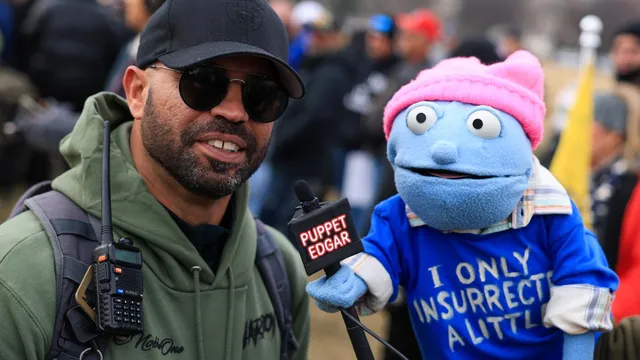
Enrique Tarrio plans to sue media for falsely labeling him an ICE agent
Enrique Tarrio plans to sue media for falsely labeling him an ICE agent
- Enrique Tarrio's name surfaced in a leaked database implicating him as an ICE agent, which led to widespread media attention.
- Following the leak, Tarrio has faced a surge of death threats due to the unfounded claims.
- He is now contemplating legal action against the media outlets that published the allegations without proper verification.
Story
In January 2026, Enrique Tarrio, a former leader of the Proud Boys, publicly responded to allegations circulating in the media that labeled him as an Immigration and Customs Enforcement (ICE) agent. These claims stem from an alleged database leak that revealed a list of individuals purportedly associated with ICE, which included Tarrio's name circled among those agents. In the wake of this misinformation, Tarrio faced a significant increase in death threats and felt compelled to confront media outlets that disseminated the claims without verification. He pointed out that several prominent news organizations, including NowThis Impact and Telemundo, had shared the list, raising issues about journalistic practices and integrity amid political polarization. Tarrio’s statement indicated that he was seriously considering legal recourse as a response to the alleged defamation, and he expressed the notion that a lawsuit against the media would be relatively easy after his recent civil suit against the United States was handled favorably. In addressing the situation, Tarrio noted the frustration regarding the abrupt conclusions drawn by media outlets—some of which did not take the time to verify the context surrounding his name’s inclusion on the list.
Context
The Proud Boys, a far-right organization known for its involvement in various political demonstrations and controversies, has been at the center of significant media discourse, especially since the onset of 2026. This report aims to provide an overview of the ongoing controversies related to the group and their portrayal in the media. The Proud Boys have been associated with incidents of violence and has faced criticism for promoting extremist views, which has resulted in heightened scrutiny from both the public and media outlets. The handling of these issues by the press tends to polarize audiences, often leading to debates about free speech, misinformation, and the responsibilities of the media in representing such groups accurately and fairly. As the group continues to be engaged in various protests and is implicated in significant events, the media coverage has evolved. Initially viewed as a fringe group, the Proud Boys have gained more prominence in the political landscape, particularly amid rising tensions in the socio-political climate. Reports have frequently focused on the group's recruitment tactics, ideology, and involvement in violent clashes, which often leads to a negative portrayal. Critics argue that media outlets sometimes exaggerate the group's influence, while supporters claim that such coverage neglects the broader context of their actions and supporters, making a complex situation even more contentious. Moreover, the media has discussed the implications of associating the Proud Boys with mainstream political narratives. The organization's visibility in the media has sparked discussions about how far-right groups influence political discourse and societal values. This influence raises ethical questions regarding the extent to which the media should engage with or provide a platform for such organizations. Prominent political figures and commentators have weighed in on these issues, reflecting deep divisions in public opinion about the interpretation of the Proud Boys' actions and the media's role in covering them. In summary, the Proud Boys have emerged as a focal point of media controversy in early 2026, raising critical questions about the intersection of journalism, free speech, and extremism. While their actions remain under relentless scrutiny, the way these events are reported continues to shape public perception. Understanding the nuances in media representation is essential for dissecting the Proud Boys' role in contemporary politics, as well as recognizing the responsibilities that come with reporting on groups characterized by contentious ideologies.


