

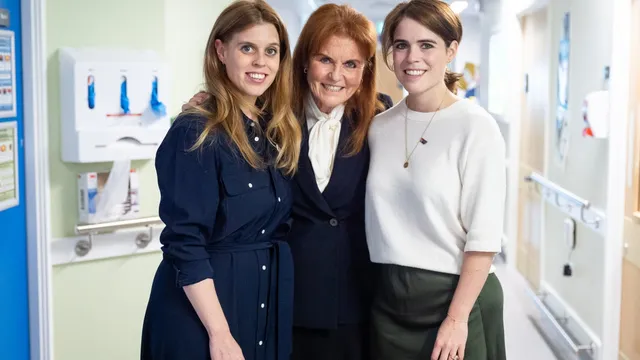
Sarah Ferguson visits Jeffrey Epstein with daughters after his release
Sarah Ferguson visits Jeffrey Epstein with daughters after his release
- Sarah Ferguson took her daughters to visit Jeffrey Epstein shortly after his release from prison for child sex crimes.
- This visit was revealed through communications released by the Department of Justice indicating the nature of their relationship.
- The connection raises concerns about the implications for the Princesses and their public image.
Story
In the United States, documents released by the Department of Justice revealed that Sarah Ferguson, the Duchess of York, took her daughters Beatrice and Eugenie to visit Jeffrey Epstein only five days after he was released from prison in July 2009. Epstein had been incarcerated for 13 months in Florida after pleading guilty to soliciting sex from minors. During this visit, arrangements and details were shared between Ferguson and Epstein’s associates, highlighting the casual nature of their relationship. Ferguson expressed her desire to involve her daughters in her social and professional network. Additionally, communications revealed Ferguson’s complicated and often conflicted feelings towards Epstein. Ferguson later described Epstein as a friend and mentioned feelings of betrayal when he appeared to cut ties with her. Emails dating back to 2011 show Ferguson expressing disappointment over their friendship, suggesting that she felt used to gain access to her then-husband, Prince Andrew. Despite the controversy surrounding Epstein, Ferguson attempted to maintain a relationship with him due to perceived personal and professional benefits. This relationship came under intense scrutiny following Epstein's public fall from grace after numerous allegations of sexual abuse came to light. The fallout from this connection has raised questions about the impact on Beatrice and Eugenie, who had to navigate their identities as young royals while being associated with their mother’s controversial friendships. Discussions arose whether the princesses should have refused their mother’s invitation to meet Epstein, considering the accusations against him. The connection to Epstein represents a broader scrutiny of the royal family's relationships and the implications these connections could have for the heirs. Multiple sources indicate that this incident may affect the public perception of the princesses, especially as scrutiny on their family continues. There has been speculation about whether they might consider distancing themselves from parental figures amidst growing criticism. Overall, the situation highlights the complex dynamics within the royal family and the significant ramifications of their associations, particularly in a changing public narrative surrounding morality and accountability.
Context
The impact of royal family associations with controversial figures has been a subject of intense scrutiny over the years. Such associations can significantly influence public perception, affect institutional credibility, and alter the royal family’s relationship with the populace. In an era where social media amplifies narratives quickly, the implications of their connections are even more pronounced. The dynamics of public opinion are particularly delicate for royal families, which thrive on the goodwill and support of their subjects. An association with any individual or group deemed controversial can undermine this support and provoke public backlash, as seen in various historical incidents. One of the primary concerns surrounding royal family associations with controversial figures is the potential for reputational damage. This risk is compounded by the complexity of contemporary political landscapes, where affiliation can be interpreted in myriad ways. For instance, royal connections with politically charged individuals may lead the public to draw conclusions about the royal family's stances on certain issues, even if the royal family intends to remain neutral or apolitical. The ramifications of negative associations can result in protests, calls for accountability, or demands for transparency, ultimately challenging the institution's long-standing traditions of decorum and reserve. Moreover, the royal family's capacity for soft power can be diminished through association with controversial figures. These relationships may divert attention from positive engagements and charitable initiatives, which are often designed to uphold the royal family’s image as a stabilizing and unifying force in society. The spotlight on negative associations could overshadow their contributions to social causes, leading to a perception of the monarchy as out of touch or irresponsible. This misalignment between public expectations and the actions of royal family members can trigger a shift in societal attitudes, impacting not only public support for the monarchy but also its relevance within contemporary society. In conclusion, the associations of royal families with controversial figures can yield significant and varied impacts, urging a careful navigation of royal engagements in an increasingly polarized and scrutinous world. The challenges posed by such affiliations continue to evolve, requiring royal families to adapt their approaches to maintain their standing and connection with citizens. As the public becomes more vigilant and critical of the actions of its leaders, the royal family's associations remain a critical component of its broader strategy for sustaining relevance and support in the modern era.


