

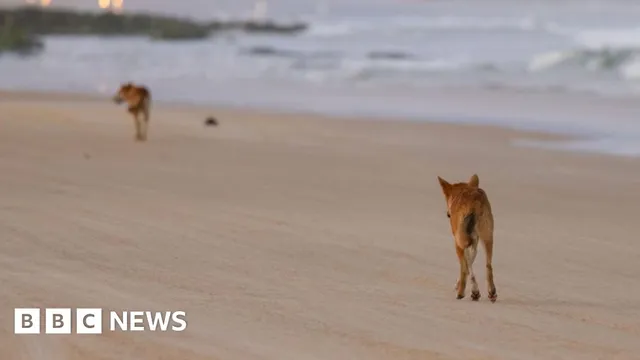
Canadian tourist found dead as dingoes surround her on Australian beach
Canadian tourist found dead as dingoes surround her on Australian beach
- A 19-year-old Canadian woman was found dead on an Australian beach surrounded by dingoes.
- Local police are investigating whether she died from drowning or an attack by the animals.
- This incident highlights the importance of safety around wildlife while visiting natural areas.
Story
On January 19, 2026, the body of a 19-year-old woman from Canada was discovered on K'Gari, an island in Queensland, Australia. Local police reported that her body was found around 6:30 AM local time by two men in a vehicle who spotted a group of approximately ten dingoes near the lifeless body. The authorities are currently investigating the circumstances surrounding her death, evaluating whether it resulted from drowning while swimming or from a potential attack by the wild animals. According to Inspector Paul Algie, the body exhibited markings indicative of having been touched by dingoes, leading to concerns about animal involvement in her passing. This area is noted for being a wilderness habitat for dingoes, with known instances of human-animal interactions, stressing the importance for visitors to maintain a safe distance from these wild animals. The young woman had been living and working at a local backpacker's hostel for six weeks before she went for a morning swim. She informed her friends of her plans to swim at 5 AM but did not return. Her tragic death highlights the dangers associated with encountering wild animals, particularly in locations recognized for their natural wildlife. Moreover, it raises awareness of safety protocols that are essential for individuals visiting areas where wild species, such as dingoes, are present. Notably, while dingoes hold cultural significance to the local First Nations people, they still remain wild animals and should be approached with caution and respect. The Queensland police have scheduled a post-mortem examination to ascertain the precise cause of death, which could provide more clarity on whether her demise was accidental or the product of a more sinister encounter. As the investigation unfolds, local authorities continue to reiterate the message of treating wildlife with respect while enjoying the natural beauty of regions like K'Gari. This tragic incident serves as a stark reminder of the unpredictable variables that nature can present, especially in wilderness areas, where encounters with wildlife require vigilance and preparation. In conclusion, this incident underscores the significance of heeding safety advice when encountering wild animals, celebrating the beauty of nature while acknowledging the inherent risks involved. The mix of human activity and the presence of wildlife often leads to situations where individuals may find themselves in precarious circumstances if precautions are not taken. Authorities remain committed to gathering facts surrounding the woman's death, aiming to prevent future tragedies in similar settings.
Context
Dingo attacks on humans in Australia have been a subject of concern and discussion for decades, particularly as the human population continues to expand into areas that were once the domain of these wild canines. Dingoes, which are descendants of domestic dogs, are found in various regions across Australia, particularly in rural and remote areas. Their behavior is influenced by their environment and the relationship they have with humans. Over the years, there have been reports of dingo attacks on humans, some of which have resulted in severe injuries and fatalities. These incidents generally arise from a combination of factors, including food availability, human interaction, and the specific context of the encounter. Historical accounts of dingo attacks date back to the early European settlements in the 18th century. Since then, there have been varying degrees of interactions between dingoes and humans. Attacks tend to occur when dingoes become habituated to human presence, particularly when humans provide food, either intentionally or inadvertently. This behavior leads to what is known as "food-conditioning," wherein dingoes associate humans with a food source. Such encounters can prompt aggressive behavior, especially if the dingo feels threatened or is protecting its territory or young. Research indicates that most attacks occur in areas where dingoes are familiar with human residents or where food sources are scarce. In the early 2000s, there was a notable spike in dingo attacks, including some that led to tragic outcomes. One of the most infamous cases occurred in 2001 on Fraser Island, where a young boy was attacked by a dingo, highlighting the potential dangers of human-dingo interactions. Subsequent investigations led to increased awareness of the need to manage dingo populations and educate the public on safe practices around these animals. It became evident that prevention strategies, including public education, strict regulations regarding feeding dingoes, and monitoring their behavior, were essential to minimize risks associated with dingo encounters. Additionally, the perception of dingoes in Australian culture has evolved, where conservation efforts juxtapose the need for wildlife management and public safety. Ongoing discussions among researchers, wildlife managers, and the public aim to find a balanced approach to ensure both the safety of humans and the preservation of these unique creatures in the Australian ecosystem. Strategies that promote coexistence, such as separating human habitats from dingo populations and respecting their natural behavior, are critical to reducing the incidence of future attacks. Understanding the complex interplay between humans and dingoes not only serves the purpose of preventing attacks but also highlights the challenges of wildlife conservation in a rapidly changing world.


