

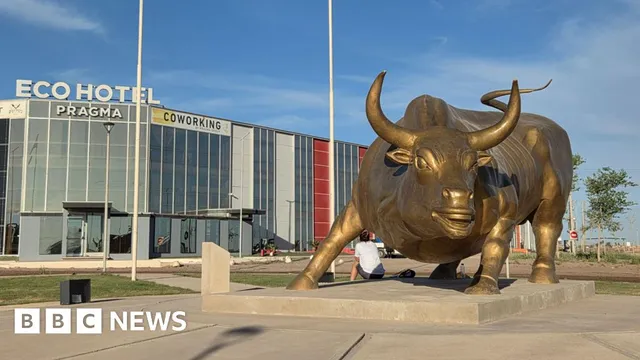
Argentina boosts oil and gas exports through fracking success
Argentina boosts oil and gas exports through fracking success
- Fracking in Argentina, particularly in the Vaca Muerta formation, became commercially viable after its legalization in 2014.
- As of early 2025, there are 3,358 active fracking wells in Vaca Muerta, contributing significantly to the country's energy exports.
- Despite the potential benefits from fracking, experts warn that it may not resolve Argentina's wider economic challenges.
Story
Argentina has experienced a transformation in its economic landscape due to the development of fracking in the Vaca Muerta formation. This area, located in Neuquén Province, was relatively underdeveloped until the legalization of fracking in 2014, which allowed for the commercial extraction of fossil fuels. Initially discovered in 1931, the potential of these deposits remained untapped until recent advancements in technology and changes in regulatory frameworks fostered a conducive environment for investment and exploration. The first major fracking operation in Vaca Muerta involved a partnership between the Argentine state-owned Yacimientos Petrolíferos Fiscales (YPF) and the US company Chevron. As of early 2025, Vaca Muerta has 3,358 active wells, contributing significantly to Argentina's oil and gas production. Approximately 1,632 are oil wells, while 1,726 are gas wells. This surge in production has positioned Argentina as a net exporter of energy, reversing a previously unfavorable trade balance where energy imports were a significant burden on the economy. Industry experts note that the country's newfound ability to earn foreign currency from these exports is crucial, particularly given Argentina's ongoing economic struggles. Despite the positive developments, experts urge caution regarding the expectations surrounding Vaca Muerta. Many analysts argue that the region's potential to resolve Argentina's economic challenges is overstated. While it has provided a robust source of revenue, the country is still grappling with structural issues, including agricultural shortfalls and high levels of debt that deter foreign investment. Obstacles remains, such as poor credit ratings that cause reluctance among international investors. Additionally, firms face restrictions on currency exchange, limiting their ability to repatriate profits. Political consensus has played a role in promoting the extraction efforts in Vaca Muerta, with support across main political parties for increased mining activities. This collective agreement aims to leverage energy resources for broader economic recovery. Local businesses in regions like Añelo are experiencing direct benefits, with service demands growing as oil and gas activities expand. However, the overall impact of these developments on the country's economic health and future remains uncertain, highlighting a delicate balance between growth opportunities and the risks associated with overreliance on a single sector.
Context
The Vaca Muerta formation is a prominent shale oil and gas reserve located in the Neuquén Province of Argentina, which has garnered significant attention due to its potential economic impact on the country. As of today, it represents one of the largest unconventional hydrocarbon reserves in the world. The development of Vaca Muerta is poised to significantly alter Argentina's energy landscape, moving the country closer to energy independence while also providing a potential boost to the economy. Its extraction has the potential to create thousands of jobs, increase national revenue through exports, and attract foreign investment to the region, which has historically suffered from economic instability and limited development. The economic implications of Vaca Muerta extend beyond the direct impact of oil and gas extraction. The development efforts require infrastructure improvements, including transportation, roads, and social services, prompting regional growth and urban development. Local businesses are expected to thrive alongside the energy sector, with increased demand for accommodation, food services, and other support industries as workers flock to the region. Additionally, Vaca Muerta could enhance Argentina's negotiating power on the global energy stage, especially with the recent fluctuations in fossil fuel prices and the shift toward energy diversification in many countries. Challenges remain in the sustainable development of Vaca Muerta, particularly concerning environmental concerns and regulatory frameworks. Hydraulic fracturing, or fracking, is a contentious issue, with implications for soil and water resources that require strict oversight to mitigate potential environmental harm. The Argentine government must balance the economic benefits of rapid development with the ecological and social impacts that accompany such large-scale industrial activity. Policymakers are faced with the challenge of creating regulations that promote responsible extraction while ensuring the welfare of local communities and preserving the environment. In conclusion, the Vaca Muerta formation holds transformative potential for Argentina's economy, contributing to energy independence and economic revitalization in a context of rising global energy demand. Careful management of its resources will be crucial to harnessing this potential fully. By leveraging the socio-economic benefits while addressing the environmental challenges, Argentina can position itself as a leader in the energy sector, paving the way for sustainable growth and development.


