

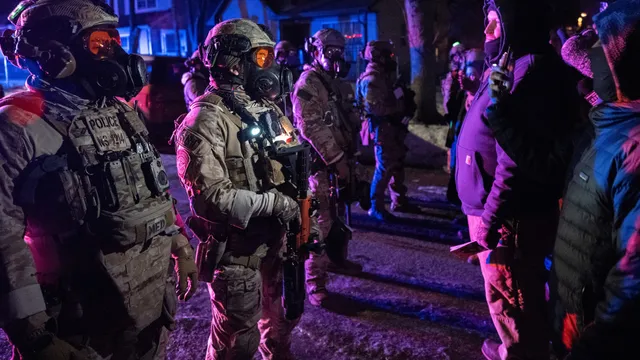
Federal officer shoots man during arrest attempt in Minneapolis
Federal officer shoots man during arrest attempt in Minneapolis
- On January 15, 2026, a federal officer shot a man in Minneapolis during an arrest attempt.
- The man, in the U.S. illegally from Venezuela, fled the scene after driving away and crashing into a parked vehicle.
- Local officials express concern over the impact of federal enforcement actions on community trust and safety.
Story
In Minneapolis, Minnesota, a significant incident involving federal law enforcement occurred on January 15, 2026. The Department of Homeland Security (DHS) reported that a federal officer shot a man in the leg during an attempted arrest. The man, originally from Venezuela, was stopped by law enforcement around 6:50 p.m. CT for being in the U.S. illegally. After resisting arrest, he drove away, crashing into a parked car before fleeing on foot. The officer shot the suspect during a struggle as he attempted to detain him. Following the shooting, both the man and the officer were hospitalized. The man sustained non-life-threatening injuries. Eyewitness accounts revealed a tense environment, as law enforcement officers quickly surrounded the area and took two individuals from an apartment into custody. Minneapolis Police Chief Brian O’Hara shared that the police department had received reports of the incident and reassured the public that investigators would thoroughly examine the circumstances surrounding the shooting. The situation escalated concerns among local residents, as Minnesota faced an influx of federal enforcement agents addressing immigration issues. Many residents, leaders, and protesters voiced feelings of fear and instability in the community, likening the presence of law enforcement to an invasion. The high visibility of federal officers in the state has drawn criticism amid ongoing tensions surrounding immigration policies and enforcement actions. Local leaders, including Minneapolis Mayor Jacob Frey, expressed their concerns regarding safety and community trust. He highlighted the unsatisfactory nature of the circumstances affecting the city, emphasizing that maintaining public safety during such operations is increasingly challenging. Amid concerns fueled by the actions of federal officers, there has been an explicit call for unity and peace to counterbalance escalating frustrations and fears, particularly in light of heightened political discourse surrounding immigration enforcement under the current administration. Recently, former President Donald Trump indicated a willingness to use military force to maintain order among rising tensions between protesters and federal personnel, further complicating the already volatile situation. As authorities begin their investigations, local leaders and community members worry over potential future confrontations amid growing police presence and enforcement actions that challenge the fabric of community relations and trust.
Context
The current immigration policy in the United States is shaped by a complex framework of laws, regulations, and executive actions that aim to manage the flow of immigrants while addressing national security, economic needs, and humanitarian considerations. As of 2026, the U.S. immigration system operates under several key components, including family reunification, employment-based immigration, refugee and asylum policies, and various visa categories. Family reunification remains a cornerstone of U.S. immigration policy, allowing U.S. citizens and legal permanent residents to sponsor relatives for permanent residency. Employment-based immigration programs facilitate the entry of foreign workers to fill labor shortages in sectors where U.S. workers are not available, emphasizing the importance of skilled labor in the economy. In addition, programs like Temporary Protected Status (TPS) provide relief for individuals unable to safely return to their home countries due to extraordinary conditions, such as natural disasters or armed conflict. The Biden administration has sought to reverse several immigration policies implemented during the previous administration, focusing on more humane approaches to immigration enforcement and expanding pathways for legal residency. This includes efforts to reinstate the Deferred Action for Childhood Arrivals (DACA) program, which protects young immigrants brought to the U.S. as children from deportation, although legal challenges have created uncertainty about its future. Moreover, the administration has prioritized addressing the root causes of migration from Central America, promoting diplomatic engagement and development programs to improve conditions in those countries while increasing asylum processing capacity at ports of entry. In recent years, the U.S. has witnessed significant changes to border security measures and immigration enforcement practices, especially in response to surges in migrant encounters at the southern border. Policies have been introduced to streamline the asylum process, but they have simultaneously faced criticism for their impact on vulnerable populations. Additionally, the increased use of technology and infrastructure at the border aims to balance security concerns with the need for humane treatment of migrants. The U.S. continues to grapple with the tension between enforcing immigration laws, ensuring national security, and upholding human rights within its immigration system. Overall, the U.S. immigration policy landscape is continually evolving, influenced by legal rulings, political dynamics, and global events. The focus moving forward will likely remain on finding a balance between enforcing immigration laws and providing humanitarian assistance. As the country navigates complex migratory patterns resulting from economic hardship, political instability, and climate change, policymakers will need to adapt existing frameworks to adequately address the challenges and opportunities that immigration presents to U.S. society.


