

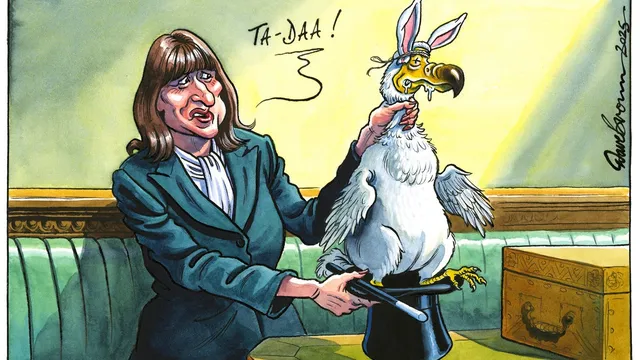
Rachel Reeves imposes steep tax hikes on working individuals
Rachel Reeves imposes steep tax hikes on working individuals
- Rachel Reeves introduced a new budget that imposes heavy tax increases on taxpayers amid a cost of living crisis.
- The budget has angered many citizens, particularly affecting middle earners who feel burdened by these new taxes.
- Critics argue that the budget prioritizes political agendas over public needs and may risk the country’s economic stability.
Story
In the United Kingdom, Rachel Reeves recently presented a budget that has sparked considerable public backlash. The budget includes a £26 billion package of tax rises aimed primarily at taxpayers who are already facing the burden of a cost of living crisis. Income tax thresholds are set to remain frozen until the 2030-31 fiscal year, which analysts believe will drag approximately 1.7 million additional people into higher tax bands. Critics have pointed out that this budget seems to be heavily focused on appeasing political aims rather than addressing urgent public needs. Many readers have expressed outrage at the perceived 'stealth tax' implemented by Reeves, questioning how a government promising to protect working people could justify such sweeping increases that disproportionately affect the middle class. The changes include taxing pension contributions over £2,000 and capping cash ISA allowances, which many believe negatively targets those trying to save and plan for their futures. This is seen as a direct attack on aspirations and sends a message prioritizing government welfare over individual financial responsibility. Alongside these tax hikes, the government appears to have increased the cap on child benefits, further reigniting society's debate about welfare in a country where the welfare bill has already spiraled out of control. The message to taxpayers, according to critics, is that responsible financial practices are being discouraged while irresponsible behavior is incentivized. Ultimately, Reeves's budget is perceived as one driven by a desperate need for political survival, attempting to gain breathing space by borrowing now and taxing harder later. The immediate political gains seem to overshadow long-term economic concerns, with commentators warning that this approach could have detrimental consequences for the economy's growth and public trust. Critics fear that unless there is a turnaround in economic stability, the burden placed on hardworking individuals will only intensify, leading to a cycle of increased dissatisfaction and financial strain in the future.
Context
The UK income tax changes in 2025 reflect a significant shift in the government's approach to tax policy aimed at addressing economic challenges and financing public services. The alterations are strategically designed to impact different income brackets differently, promoting a more equitable system while also aiming to stimulate growth in the economy. These changes can be viewed against the backdrop of ongoing discussions about taxation levels and government spending, particularly in light of the recent economic landscape characterized by inflationary pressures, public debt, and the need for sustainable funding of essential services. One of the most notable changes in the income tax framework is the adjustment of tax thresholds. The personal allowance, which is the amount of income not subject to income tax, is set to rise to accommodate the increasing cost of living. This change ensures that low to middle-income earners retain a larger portion of their earnings. The government aims to strike a balance between generating necessary revenue and providing relief to households facing financial strain. Additionally, higher tax rates for top earners have been introduced, which signifies a shift towards demanding more from individuals with the ability to contribute significantly to the public purse. Furthermore, the reformation of tax reliefs and deductions has been central to the 2025 changes. Simplifying tax reliefs, particularly for investments and pensions, is expected to enhance compliance while encouraging savings and investment among individuals. These modifications aim to create a more favorable environment for personal financial planning and economic engagement, while simultaneously curbing potential abuses of the tax system. The government is particularly focusing on aggressive tax planning strategies that have been criticized in the past, ensuring fair play across the board. In summary, the changes made to the UK income tax system in 2025 represent a pivotal moment in fiscal policy aimed at creating a fair yet efficient tax regime. The focus on adjusting thresholds and tax rates, paired with a simplification of reliefs, reflects an intent to alleviate burdens on lower earners while ensuring that those with higher incomes contribute appropriately. By addressing these critical elements, the government seeks to foster economic stability and growth, thus supporting the nation's long-term financial health.


