

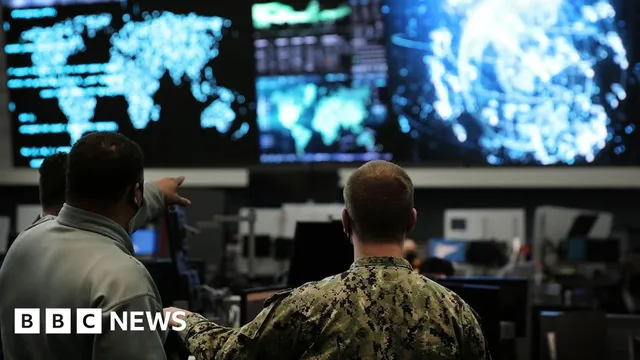
U.S. cyber command disrupts Iran's defenses before strikes
U.S. cyber command disrupts Iran's defenses before strikes
- Before launching airstrikes on Iran, U.S. Cyber Command executed operations to disrupt Iran's communication abilities.
- This marks a continuation of the U.S.'s strategy of utilizing cyber warfare, previously exemplified by the Stuxnet attack on Iranian facilities.
- The evolution of warfare suggests an increasing reliance on cyber capabilities from both the U.S. and Iran as conventional military measures are challenged.
Story
The Iran war, which started on February 28, 2026, has seen the U.S. employing offensive cyber operations as an integral part of its strategy. Prior to the drop of U.S. bombs, U.S. Cyber Command and Space Command undertook operations to incapacitate Iran's ability to detect and respond to the military actions. This included using what is described as 'non-kinetic effects' that blinded Iran's communication systems, effectively rendering them defenseless against the strikes that followed. The role of cyber warfare has been highlighted as significant, with previous instances also showcasing this tactical approach against Iran, including the infamous Stuxnet attack in the 2000s. Concurrently, U.S. President Donald Trump has indicated that similar operations occurred in Venezuela earlier in January 2026 to create blackouts as a diversion prior to military movement against Nicolás Maduro. Since the beginning of the conflict, there have been multiple signs of retaliation from Iranian-affiliated groups, particularly targeting Israeli systems. Reports indicate that Iranian groups linked to the Islamic Revolutionary Guard Corps have engaged in hacking attempts against various entities in Israel, though these have been characterized by a defensive posture rather than aggressive cyber assaults. The changing dynamics illustrate a complex landscape where cyber capabilities are pitted against kinetic military responses, with both countries utilizing advanced technology and cyber tactics to achieve their strategic objectives. U.S. officials, while less transparent about their cyber operations than Iran, have acknowledged the critical role of internet and communication disruptions. This transformation in warfare emphasizes the dual aspects of modern confrontations, where cyber and conventional military operations work in tandem. Analysts have suggested that as Iran's conventional capabilities are degraded, they may increasingly rely on cyber-attacks as a means of retaliation and protection of their interests. This evolving strategy signals a shift in how conflicts are conducted, highlighting the importance of cybersecurity in global military engagements. The future of cyber warfare remains uncertain, with expectations that Iran's capabilities could proliferate in response to sustained military pressure. With Iranian state-sponsored hacking groups remaining active, this conflict may see an escalation in cyber operations as a countermeasure, reflecting a broader trend in asymmetric warfare tactics. Rather than solely relying on traditional military engagements, both nations may intensify their cyber confrontations, leading to increased tensions and potential collateral damage in the domains of information security and civilian infrastructures.
Context
The history of cyber warfare between the U.S. and Iran is characterized by escalating tensions that have manifested through a series of cyber attacks and countermeasures, with significant implications for national security and international relations. This conflict began to take shape in the mid-2000s, particularly as Iran's nuclear program became a focal point of concern for the U.S. and its allies. The most notable incident during this period was the Stuxnet worm, which was discovered in 2010. This sophisticated cyber weapon, widely believed to be a joint effort by the U.S. and Israel, specifically targeted Iran's Natanz nuclear facility, causing substantial damage to centrifuges responsible for enriching uranium. Stuxnet set a precedent for the use of cyber capabilities as a means of achieving military objectives without traditional warfare. Following Stuxnet, Iran's response incorporated improving its cyber capabilities and developing a structured cyber warfare strategy. By employing cyber espionage, hacktivism, and targeting critical infrastructure, Iran aimed to demonstrate its capability to retaliate and deter further attacks. Notable incidents include the 2012 hacking of Saudi Aramco, which destroyed data on approximately 30,000 computers, illustrating Iran’s willingness to leverage cyber attacks beyond direct conflicts. As tensions continued to rise, particularly over nuclear negotiations and regional destabilization, Iran intensified its cyber operations against U.S. governmental and private sector entities, leading to a series of retaliatory activities by U.S. cybersecurity teams. In the years following Stuxnet, both nations showcased their cyber prowess through a series of high-profile cyber confrontations. In addition to the attacks against infrastructure, the U.S. launched various cyber operations aimed at countering Iranian influences in the Middle East. One such operation, called Cyber Guardian, aimed to protect U.S. and allied networks from Iranian cyber threats, while simultaneously seeking to disrupt Iran's own cyber capabilities. These digital skirmishes escalated further in 2019 when the U.S. downed an Iranian drone, which triggered a wave of cyber attacks from Iran against U.S. entities. The ongoing back-and-forth between the two nations has demonstrated the complexity of cyber warfare, where state-sponsored initiatives can swiftly escalate and result in physical repercussions. The history of cyber warfare between the U.S. and Iran underscores the importance of cybersecurity and the need for robust defenses against increasingly sophisticated and unpredictable digital threats. As advancements in technology continue to evolve, the nature of conflicts through cyberspace will likely become more intertwined with traditional forms of warfare. The U.S. must, therefore, enhance its capability to not only protect its critical infrastructure but also to engage strategically in the cyber domain to prevent potential crises that may arise from miscalculations or escalations in hostilities. Both nations must recognize the latent possibilities for conflict in cyberspace, emphasizing the need for dialogue and potential frameworks to manage cyber engagements and mitigate risks.


