

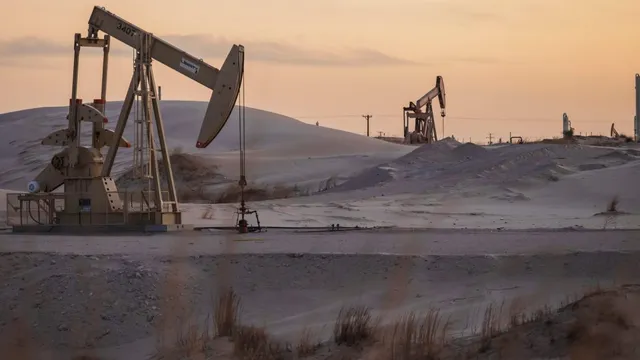
U.S. oil producers refuse to raise output amid soaring prices
U.S. oil producers refuse to raise output amid soaring prices
- Oil output from Persia has declined significantly, creating supply shortages.
- A Dallas Fed survey suggests executives expect minimal changes in U.S. oil production despite high prices.
- The uncertainty in the market is likely to continue affecting capital spending and production decisions.
Story
The ongoing conflict in the Middle East, particularly the Iran war, has led to a significant drop in Persian Gulf crude output, which has decreased by 14.5 million barrels per day or 57% since the war began. While prices for West Texas Intermediate have surged from $57 per barrel at the beginning of the year to around $100, U.S. oil and gas executives express a lack of confidence in the market, with many predicting little to no change in domestic production levels this year, citing significant uncertainty and volatility in price as the primary reasons for their reluctance. In a survey conducted by the Dallas Fed, responses revealed that 30% of executives foresee no change in production, while 43% expect an increase of 1 to 250,000 barrels per day, and only a small fraction anticipate additional output over 1 million barrels. The instability is further compounded by the current administration’s unpredictable policies, which have created a challenging business environment, leading to dampened capital spending and a cautious approach to drilling and production planning for the coming years. With the supply gap widening, experts predict that addressing the shortfall from the conflict will require more stable conditions and higher future prices for additional drilling to be incentivized. The situation is becoming increasingly dire with fresh inflows of oil from the Middle East drying up, prompting countries to dip into their reserves and raising alarm about inventory levels. Dallas Fed reports indicate that reserves are starting to look concerning due to the extended closure of the Strait of Hormuz, through which a significant portion of the world’s oil passes, further increasing the uncertainty in the global oil market.


