

Chevron increases Venezuelan crude oil imports amid rising global prices
Chevron increases Venezuelan crude oil imports amid rising global prices
- Chevron is currently importing an average of 250,000 barrels of Venezuelan crude oil daily.
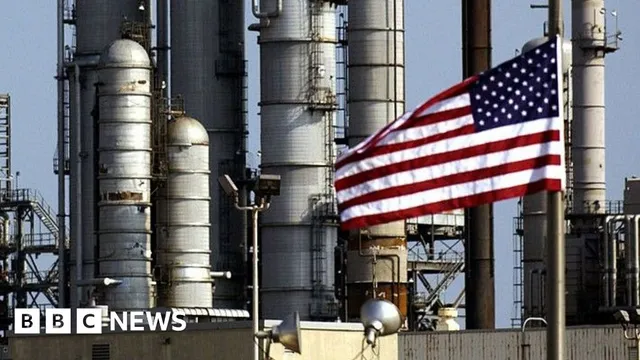
- The Chevron refinery in Pascagoula, Mississippi, is optimized for processing Venezuelan heavy oil.
- Increased imports could lead to lower gasoline prices for U.S. consumers in the future.
Story
In early 2026, Chevron, based in the United States, began importing significant quantities of crude oil from Venezuela, averaging around 250,000 barrels daily. This development followed the easing of tensions around oil supplies, partially attributed to geopolitical relations in Latin America and the state of the U.S. oil market. The refinery that Chevron operates in Pascagoula, Mississippi, is specifically designed to process heavy oil, making Venezuelan crude an ideal fit for the facility's capabilities. Chevron's presence in Venezuela is notable as it is currently the only major U.S. oil company involved in extraction activities there, despite ongoing challenges in the region's political environment. Many other companies opt to acquire Venezuelan oil from domestic producers instead. The company's strategic importation of oil is particularly significant given the global fluctuations in energy prices, with many experts suggesting that increasing supplies could eventually lead to more stable prices for consumers in the U.S. Despite the influx of imported Venezuelan oil, U.S. gasoline prices have not reflected a decrease. Drivers often express frustration at the persistent high costs at the pump, even when there's a significant local supply of crude. Some speculate that government actions might be influencing these prices, suggesting that stored reserves are being optimized to maintain higher fuel costs. Additionally, the pricing of crude oil remains closely tied to global market fluctuations, which can offset the benefits of increased imports from Venezuela. Looking forward, Chevron plans to increase its Venezuelan crude imports, potentially ramping up its daily intake by another 50%, indicating a strong long-term commitment to Venezuelan oil. This move comes amidst a strategic focus on optimizing U.S. refineries to handle heavier oils, signaling a shift in how U.S. oil companies navigate their operations amid evolving geopolitical landscapes and energy market demands.
Context
The impact of Venezuelan oil on US gasoline prices represents a crucial aspect of both international relations and economic stability. For decades, Venezuela has possessed one of the largest proven oil reserves in the world, placing it as a key player in the global oil market. The relationship between Venezuela and the United States has evolved, particularly following periods of political turmoil in Venezuela and changing U.S. foreign policy. These changes have significant implications for oil supply chains, pricing structures, and ultimately the cost of gasoline for American consumers. Venezuelan oil, historically characterized by its heavy and sour grade, plays a unique role in the global supply due to its specific properties which are well-suited for certain refineries in the United States. However, sanctions and geopolitical issues have drastically reduced the volume of Venezuelan oil available to U.S. markets in recent years. The disruption in the supply from Venezuela has resulted in a ripple effect on U.S. gasoline prices, as domestic refineries reliant on Venezuelan crude must either invest in expensive modifications to process lighter grades of oil from other sources or pay a premium for imports from more stable, yet costlier, oil-producing nations. This reliance on imports from diverse sources increases the vulnerability of U.S. consumers to volatile global oil markets driven by geopolitical conflicts and natural disasters, further inflating gasoline prices. Additionally, the fluctuations in oil prices are exacerbated by OPEC's production quotas and Russian-operated pipelines, both of which frequently create uncertainties in oil availability. On the other hand, the potential reinstatement of trade relations and the easing of sanctions on Venezuela could theoretically lead to increased imports of Venezuelan oil into the U.S., which may help stabilize or even lower gasoline prices. This scenario hinges on the political landscape and whether the current Venezuelan administration can restore confidence to foreign investors and abide by international norms. Any significant upswing in Venezuelan oil imports would most likely influence local refinery operations and pricing strategies, translating to changes at the pumps for U.S. consumers. However, experts caution that the restoration of oil flows from Venezuela is not guaranteed and depends on a myriad of factors, including domestic political stability in Venezuela and its relationship with the U.S. Ultimately, while Venezuelan oil has the potential to affect U.S. gasoline prices, the reality remains complex and multi-faceted. In the short term, consumers and analysts alike must navigate a market influenced by geopolitical tensions, OPEC production decisions, and changing trade dynamics. The state of Venezuela's political climate and operational capacity to export oil will continue to play a pivotal role in shaping the future of U.S. gasoline prices, making it an essential area for further research and monitoring. Understanding these intricate relationships is vital for policymakers and economic strategists alike to facilitate informed decisions that protect consumers from extreme price fluctuations.


