

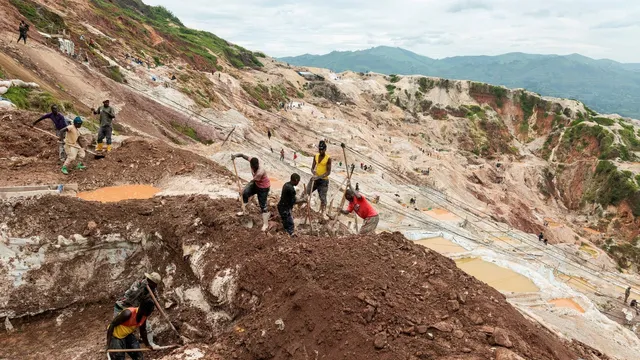
Over 200 dead in coltan mine collapse in Congo
Over 200 dead in coltan mine collapse in Congo
- More than 200 people lost their lives in a landslide at the Rubaya coltan mines due to heavy rains.
- The M23 rebel group controls these mines, exploiting resources amidst ongoing conflict and humanitarian crises.
- The incident underscores the urgent need for improved mining safety regulations and measures to protect workers.
Story
In eastern Democratic Republic of Congo, a tragic mine collapse occurred earlier this week at the Rubaya coltan mining site, leading to the death of over 200 people. The landslide took place on Wednesday, January 30, 2026, during heavy rains that caused the fragile ground to give way, engulfing miners, including women and children, who were actively working in several pits at the location. Many bodies remain buried under the rubble, and rescue operations continue amid dangerous conditions. The Rubaya mines are under the control of the M23 rebel group, which has been accused of exploiting the region's resources to fund its insurgency against the Congolese government. Local authorities reported that while efforts to rescue trapped miners are underway, many seriously injured individuals have been transported to health facilities in the town of Rubaya and are awaiting further treatment in Goma, the nearest urban center roughly 30 miles away. The situation highlights the dire safety measures in artisanal mining operations in the region, where workers often dig by hand without proper equipment or oversight. Since 2024, the M23 has seized control of Rubaya, taking advantage of the volatile environment that has persisted in eastern Congo for decades. They reportedly generate substantial revenue from taxing the coltan trade, which is crucial for electronics manufacturing worldwide. In fact, the region contributes over 15% of the global supply of tantalum, a critical element derived from coltan. As the fighting continues and survival conditions worsen for the local population, more than 7 million people have been displaced throughout the eastern region, suffering from a humanitarian crisis exacerbated by continuous violence. The mine collapse serves as a wake-up call to the Congolese authorities, highlighting the urgent need for improved mining regulations to protect workers in these hazardous environments. Despite previous international attention, the problem of artisanal mining and the exploitation of human lives for lucrative mineral resources remains unresolved in a region rich in natural wealth but plagued by conflict. Immediate and decisive actions must be taken to address the systemic issues causing such disasters and to provide safety and humanitarian assistance to affected communities.
Context
geopolitical economic market impact trends shift impact trends economic policy geopolitical analysis global trends geopolitical analysis impact trends data analysis impact economic analysis insight data policy policy policy economic economic insight trends economic geopolitical global shift policy global analysis global impact global strategic market economic impact strategic market geopolitical trends market shift data global impact insight data economic insight trends global policy market market analysis analysis insight data insight shift global analysis geopolitical geopolitical data market geopolitical economic data analysis...


