

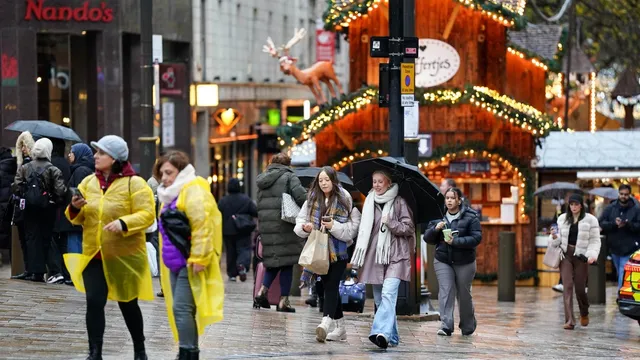
UK braces for colder Christmas without snow
UK braces for colder Christmas without snow
- The Met Office predicts a significant drop in temperatures leading up to Christmas Day.
- Cold and windy conditions with lower temperatures expected across the UK.
- A white Christmas is unlikely due to limited snowfall predictions.
Story
In the United Kingdom, Christmas Day is expected to be characterized by cold and windy conditions as forecasters predict frigid temperatures. The Met Office has advised that temperatures will drop significantly after a mild December, leading to a frosty and chilly Christmas week. By Christmas Day, temperatures are anticipated to hover between 5 to 7 degrees Celsius, feeling much colder due to brisk winds. While there might be some isolated wintry flurries, especially in southern regions, the outlook does not favor significant or widespread snowfall, meaning the prospect of a white Christmas remains unlikely. Weather patterns indicate that much of the UK will experience clear, dry weather during Christmas Eve and Day, contrasting with previous years' milder conditions. The current predictions suggest a shift towards more settled weather as high pressure develops in the region; however, the overall colder temperatures will still be felt across England and Wales, with night-time frosts predicted. Highs will be noted in the south and west where conditions might allow for some sunny spells, while there is anticipation of slightly cloudier skies in some eastern areas. The Met Office has cautioned that while it remains possible for some areas to see light snow, especially on higher ground, the chances of significant winter precipitation are low, thus diminishing the likelihood of a traditional white Christmas for most of the populace. These climatic conditions are a notable departure from the annual warmth that the UK has come to expect during this festive season.
Context
The weather patterns in the UK during Christmas have varied significantly over the years, influenced by a combination of geographical location, climate change, and various atmospheric conditions. Traditionally, the UK experiences cold, damp, and sometimes snowy weather around Christmas time, attributed to its maritime climate. However, historical data reveals that the nature of Christmas weather is increasingly erratic, with some years witnessing uncharacteristically mild temperatures and others experiencing harsh winter conditions. This phenomenon is increasingly documented in reports reflecting historical weather trends, particularly in connection with global atmospheric shifts that have been observed in recent decades. In the 20th century, notable instances of snowfall and freezing temperatures were prevalent in the UK during the Christmas season. For example, the winters of 1962 and 1970 are often cited as benchmark years for snowy Christmases. The Christmas of 1981 also marked one of the coldest on record, with heavy snowfall across large parts of the country. Such weather patterns contributed to a cultural resonance around the imagery and celebration of a 'white Christmas.' However, as we progressed into the 21st century, these patterns began to shift, with many Christmases characterized by milder and wetter conditions, attributed to ongoing climate variations. Recent decades have seen a correlation between increasingly high winter temperatures and changing weather systems, which has had a profound impact on the traditional Christmas experience in the UK. While some regions still experience cold snaps and snowfall, others have recorded unusually warm temperatures that have altered the snow probability at Christmas. Unseasonably high temperatures recorded recently suggest that the likelihood of a traditional white Christmas continues to diminish in many areas. Data from the UK Met Office and other climate research organizations indicate that such trends may persist or worsen without global intervention regarding climate issues. This evolving weather pattern is vital for understanding not just seasonal celebrations but also the broader implications of climate change on the UK’s environment and agricultural practices. The implications of changing Christmas weather extend beyond mere festive experiences. The alterations in weather patterns affect various sectors, including retail, tourism, and agriculture. For instance, milder winters may lead to changes in consumer behavior, with more people engaging in outdoor activities rather than traditional indoor winter celebrations. Thus, businesses may need to adapt their seasonal offerings and marketing strategies accordingly. Additionally, farmers may have to reconsider planting and harvesting schedules based on shifting weather patterns, impacting food supply and prices. On the whole, the historical weather patterns during Christmas in the UK serve as a critical reflection of our changing climate and its multifaceted impacts on society and the economy.


