

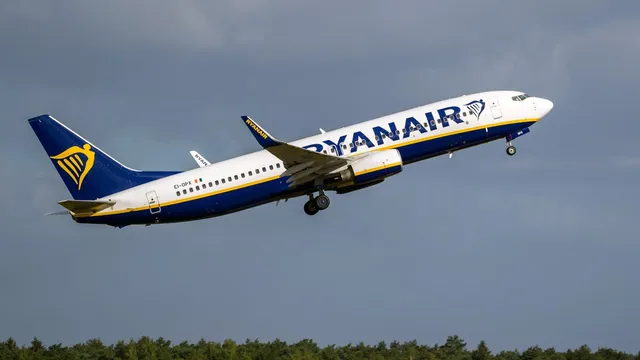
Ryanair loses landing slots due to chronic delays
Ryanair loses landing slots due to chronic delays
- Ryanair lost two landing slots at Eindhoven Airport due to repeated delays on specific routes.
- The airline is reducing its service from several European airports, citing tax increases that render routes unviable.
- These changes reflect Ryanair's ongoing struggle to maintain profitability under challenging regulatory and market conditions.
Story
In recent developments for the airline industry, Ryanair, the low-cost carrier from Ireland, has faced significant penalties related to its flight punctuality. Specifically, the airline lost its landing rights at Eindhoven Airport in the Netherlands due to ongoing issues with delayed arrivals, particularly on Monday evening flights from Sofia, Bulgaria, and Thursday evening flights from Pisa, Italy. This decision, taken by Airport Coordination Netherlands, marks a rare action taken against an airline, indicative of the seriousness of the situation. Ryanair's repeated lateness has prompted regulatory bodies to enforce stricter compliance with operational schedules. This penalty is set to affect Ryanair's operations in the upcoming summer schedule. The loss of these two slots not only highlights the airline's challenges with timely arrivals but also incoming scrutiny from regulatory authorities. Such measures are not common within the industry, revealing a growing concern over flight punctuality and the implications it has on airport scheduling and operations. Ryanair's reputation as a low-cost airline may also face scrutiny as financial penalties could impact its operational efficiency and customer service. In addition to the landing rights issue, Ryanair has recently announced plans to reduce its flights from several European airports due to what it describes as 'unviable' tax increases, particularly in France. This includes the cancellation of all flights to Bergerac, Brive, and Strasbourg scheduled for July. The airline's chief commercial officer, Jason McGuinness, attributed these reductions to tax hikes that have made previously profitable routes economically unfeasible. Furthermore, as Ryanair grapples with these challenges, it is also scaling back its Spanish flight schedule, cutting approximately 1.2 million seats and halting services to Asturias airport. This restructuring is a strategic move to align the airline's capacity with market conditions, with the company seeking to prioritize routes in Italy that have eliminated aviation taxes. The developments indicate an ongoing adaptation process for Ryanair in the face of financial pressures and regulatory changes, suggesting that the company's operational landscape may undergo significant transformations in the future.
Context
Ryanair, one of Europe’s largest low-cost airlines, has recently updated its operations regarding landing rights at Eindhoven Airport, a significant development for both the airline and the airport management. This report aims to provide an overview of the recent announcements concerning Ryanair’s landing rights and how these changes impact the airport's operations, its stakeholders, and the competitive landscape within the European aviation sector. As of November 2025, Ryanair’s decision to revise its flight schedules and landing rights reflects its strategic goals and operational adjustments, particularly in response to changing passenger demand and the evolving regulatory environment in Europe. The landing rights at Eindhoven Airport are crucial for maintaining operational efficiency and flexibility for Ryanair as they continue to offer competitive fares within their key markets. The recent announcements signal Ryanair's commitment to establishing a stronger presence at Eindhoven Airport, which is known for its strategic location serving major cities in the Netherlands and nearby regions. By securing favorable landing rights, Ryanair can better tailor its offerings to cater to both leisure and business travelers, allowing the airline to enhance its route network and frequency of services. This move aligns with Ryanair's broader strategy to increase market share in key travel corridors across Europe, particularly as the aviation industry continues to recover post-pandemic. Furthermore, the implications of Ryanair’s enhanced landing rights extend beyond the airline itself, impacting local tourism, businesses, and employment in the region. Eindhoven Airport serves as a vital gateway for travelers, and the expansion of Ryanair’s operations is likely to stimulate economic activity in the surrounding areas. Increased flight availability can boost tourism, encouraging visitors to explore the city’s cultural and historical attractions. Additionally, the enhanced connectivity may facilitate business travel, benefiting local enterprises by opening new avenues for trade and investment, thus further contributing to the region’s economic growth. In conclusion, the new developments regarding Ryanair's landing rights at Eindhoven Airport underscore a pivotal moment for both the airline and the local economy. As airports and airlines continue to navigate the complexities of post-COVID recovery, the actions taken by Ryanair demonstrate a proactive approach to capitalizing on emerging opportunities within the aviation market. The expansion of Ryanair’s operations not only enhances its market position but also plays a significant role in fostering regional development, making it a notable case study in the intersection of aviation, economics, and public policy.


