

Ghana's fisheries bill neglects women's role in fishing industry
Ghana's fisheries bill neglects women's role in fishing industry
- The Fisheries and Aquaculture Bill was recently passed in Ghana to improve the fishing sector amid challenges such as climate change and overfishing.
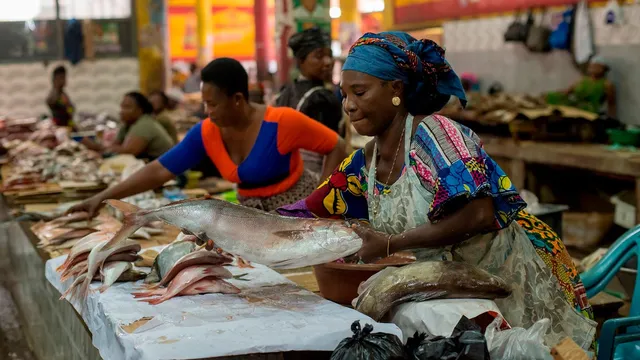
- Women account for 60% of the workforce in the fishing sector, primarily in post-harvest activities, yet their needs have been overlooked in the new legislation.
- There are calls for future regulations to address the working conditions and rights of women in the fisheries sector.
Story
Ghana has recently passed a significant piece of legislation known as the Fisheries and Aquaculture Bill, aimed at addressing challenges like climate change and overfishing that threaten its fishing sector. This new law exhibits considerable focus on enhancing fishing rights for local artisanal fishermen by expanding the fishing exclusion zone for foreign vessels from six to twelve nautical miles from the shoreline. Despite this advancement, the bill has faced criticism from advocacy organizations for neglecting the crucial role of women in the sector, who represent approximately 60% of the workforce working in post-harvest activities involved in fish processing, sale, and distribution. One notable criticism came from Matilda Ababio, acting country director of the CERATH Development Organization, which supports women in fisheries. She voiced concern that while the bill addresses essential issues concerning fish capture, it does not adequately support the health and working conditions of women engaged in post-harvest processes, where they often face hazardous working environments. The law’s neglect of post-harvest workers signifies a broader trend of marginalization within legislative frameworks, where women’s contributions and challenges are not duly recognized. Hence, there is a call for the government to implement regulations within the forthcoming year that better address the rights and needs of women in the fisheries sector as part of the enforcement of this new bill. Furthermore, the urgency for this corrective action is amplified by the backdrop of substantial foreign aid cuts, which have exacerbated vulnerabilities across communities in Ghana's fishing sector. In this climate of fiscal constraints, the need for comprehensive support for all stakeholders, particularly marginalized groups, becomes increasingly essential for fostering sustainable development in the fishing industry.


