

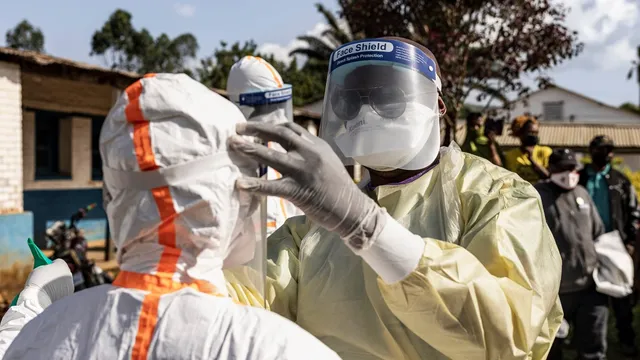
Anger erupts as Ebola protocols spark protests in Congo
Anger erupts as Ebola protocols spark protests in Congo
- The Ebola outbreak in the Democratic Republic of the Congo has caused rising anger among local communities.
- Protests erupted as youths attempted to reclaim bodies of loved ones from health authorities, leading to violent incidents.
- Urgent efforts are needed to rebuild trust and communication between health officials and the affected populations.
Story
The ongoing Ebola outbreak in the Democratic Republic of the Congo has become a critical public health emergency, marked by significant community unrest. This situation escalated recently when local youths in Rwampara set fire to an Ebola treatment center in frustration after being prevented from retrieving the body of a friend believed to have died from the virus. Reports indicated that the treatment center was not only vandalized but also that a body being stored there was burned. The unrest has highlighted a profound fear and anger in the local population, coupled with a lack of understanding regarding the infectious nature of Ebola corpses and the proper burial protocols. Over the past weeks, the outbreak has spiked with 82 confirmed cases and seven confirmed deaths, although health officials suspect the actual numbers are much higher, potentially including nearly 750 suspected cases and 177 suspected deaths. Health agencies, including the World Health Organization, have reported that the outbreak poses a very high risk to the local population, exacerbated by inadequate health facilities in a region already plagued by armed conflict. With many residents fleeing violence, the challenge of managing the spread of the disease has intensified. In response to the escalating number of cases and community tensions, local health officials and international aid organizations have pleaded for more resources and personnel to combat the outbreak efficiently. Communities have expressed mistrust and resentment towards health officials, which has complicated efforts to manage burials safely. Health workers have also faced threats, as seen in incidents where police were forced to fire shots in the air to disperse angry crowds demanding the return of loved ones' bodies from hospitals. Additionally, experts have warned that it may take six to nine months for an effective vaccine to be made available, raising concerns about the outbreak's course in the meantime. Immediate action and effective community engagement are essential to control the spread of the virus and alter the perception of the health protocols that are critical to managing the epidemic. Collaborative efforts between the Democratic Republic of the Congo, neighboring countries such as Uganda and South Sudan, and international health authorities remain crucial as officials work together to allocate resources and implement mutually beneficial strategies. Local leaders have highlighted the necessity of a dignified approach to funerals while addressing misinformation and respecting cultural customs to mitigate further unrest.


