

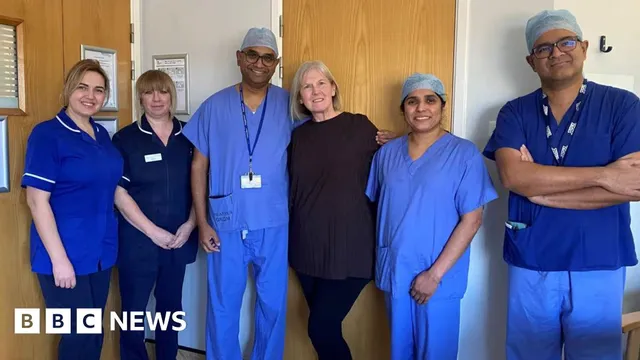
First patients undergo revolutionary robotic surgery in Margate hospital
First patients undergo revolutionary robotic surgery in Margate hospital
- The Queen Elizabeth the Queen Mother Hospital in Margate implemented robotic surgeries using a system called Hugo.
- Mandy Lee was the first patient to undergo this robotic surgery for bowel cancer.
- This innovative approach aims to improve surgical outcomes and patient recovery times.
Story
In a significant advancement for surgical procedures in the United Kingdom, the Queen Elizabeth the Queen Mother Hospital in Margate has initiated robotic surgeries using a system called Hugo. This remarkable milestone occurred in early 2023 when Mandy Lee, diagnosed with bowel cancer, became the first person to receive treatment through this innovative robotic system. As medical technology continues to evolve, the introduction of surgical robots signals a commitment to improving patient care and outcomes. With the assistance of the four-armed Hugo robot, surgeons can perform operations with greater precision and efficiency. Consultant colorectal and general surgeon Sudhaker Mangam led Lee's surgical procedure, highlighting that this advancement enables improved outcomes and faster recovery times for patients in East Kent. Mandy Lee expressed her initial fears regarding robotic surgery but emphasized her determination to remove the cancer. She felt reassured by the successful previous uses of the robot in Europe. Lee's operation involved the removal of part of her bowel, and she was pleased to experience a less painful recovery compared to traditional methods. Stanley Russell, the second patient to undergo a robotic procedure at the same hospital, shared his experience of having part of his bowel removed after doctors detected a small cancerous growth. At 68 years old, he remarked on the informative nature of the medical team's explanations and stated that his operation was less painful than anticipated. Russell underwent the procedure on a Thursday, was discharged by Sunday, and reported a steady improvement in his health thereafter. These cases highlight the potential benefits of robotic surgery in terms of recovery time and effectiveness in treating cancer. The NHS has ambitious plans to increase robotic surgeries dramatically, aiming to enhance the treatment of cancer patients across the country. The current target set forth by the NHS National Cancer Plan is to raise the number of robotic surgeries from 70,000 annually to a staggering 500,000 by the year 2035. This commitment to modernizing surgical capabilities represents a pivotal shift in how surgeries can be conducted, especially for conditions like cancer that require sensitive and precise interventions. As robotic surgery continues to gain momentum, it holds the promise of transforming the surgical landscape and improving outcomes for countless patients in the future.


