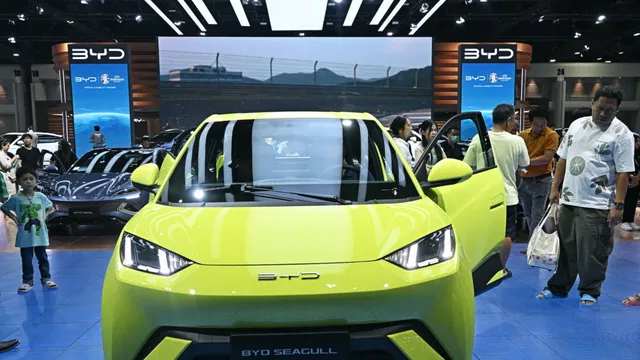
On July 22, 2026, the U.S. Senate Commerce Committee unanimously advanced a significant piece of legislation aimed at banning smart vehicles linked to China, Russia, Iran, and North Korea. This legislation, known as the Connected Vehicle Security Act of 2026, targets 'connected vehicles' that contain software or hardware associated with these nations, citing national security risks. Lawmakers expressed concerns that such vehicles could allow adversaries to access sensitive driver information or even gain control of the vehicles themselves. The bill removes previous light-vehicle weight limits and extends the ban to include entities partially exposed to these adversaries, with specific thresholds for vehicle manufacturers and software developers. The legislation outlines substantial penalties for violations, with a minimum civil penalty of $1.5 million or five times the transaction value per violation. The implementation of the ban will occur in two phases, with restrictions on internet-connected vehicles and related software taking effect in 2027, followed by hardware-related restrictions around 2030.
The bill is a response to the rapid expansion of Chinese automotive manufacturing, which has seen millions of Chinese-made vehicles enter the global market, posing a threat to American manufacturers. Lawmakers, including Senators Bernie Moreno and Elissa Slotkin, argue that the Chinese Communist Party's practices of subsidizing their products and undercutting competition jeopardize the U.S. auto industry and American jobs. The legislation aims to prevent what they describe as a potential destruction of the American industrial base. Slotkin emphasized that the bill would close the door on Chinese-origin vehicles and components at every stage, from production to sale, ensuring that data collected on U.S. roads does not reach the Chinese government.
During discussions, concerns were raised about the impact of the legislation on companies like Mercedes-Benz, which has significant Chinese investment. Senator Ted Cruz indicated that the 15 percent threshold for car manufacturers could affect such companies, and he expressed intentions to advocate for changes to this provision. The bill has also drawn attention to the broader implications for competition in the American auto market. Critics argue that while the legislation is framed as a national security measure, it may also serve to protect existing manufacturers from price competition, limiting consumer choice and potentially keeping vehicle prices higher than they would otherwise be.
As the legislation progresses, it raises important questions about the balance between national security and consumer choice in the automotive market. The ongoing debate highlights the complexities of global supply chains, particularly in the context of electric vehicles, where many components are sourced from China. The implications of this legislation will likely resonate throughout the automotive industry, affecting manufacturers, consumers, and the overall market landscape in the coming years.