

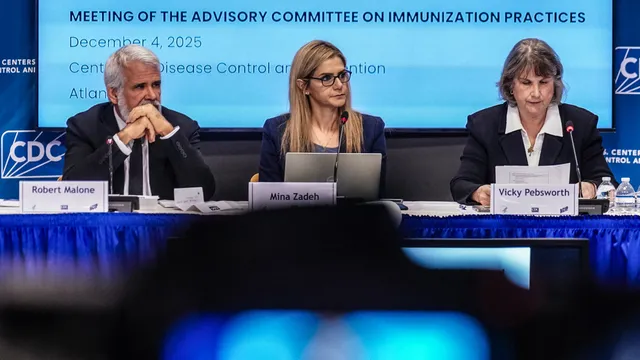
CDC advisory panel overturns universal vaccination guidelines for newborns
CDC advisory panel overturns universal vaccination guidelines for newborns
- The CDC's vaccine advisory panel recommends that newborns of hepatitis B-negative mothers may delay vaccination until 2 months of age.
- Public health experts express concerns that delaying vaccinations could lead to increasing hepatitis B cases in children.
- The recent changes raise critical discussions about vaccine policies and public trust in health recommendations.
Story
On December 5, 2025, the Centers for Disease Control and Prevention (CDC) vaccine advisory panel decided to retract its longstanding guideline advocating for the administration of the hepatitis B vaccine to all newborns within 24 hours of birth. This change in guidance comes as a significant shift from the panel's previous stance held for decades and contradicts the mainstream public health consensus regarding newborn vaccination. The Advisory Committee on Immunization Practices (ACIP), which saw a recent turnover in members by Health Secretary Robert F. Kennedy Jr., now permits parents, in consultation with healthcare providers, to determine whether their newborn should receive the vaccine if their mothers test negative for hepatitis B. This revocation of the universal vaccination recommendation is based on the assertion that parents may have the option to delay administering the first dose until the child reaches at least 2 months of age. This decision comes amid growing concerns about the credibility and data supporting such a delay, as outlined by various members of the panel and public health experts. Some members, like Dr. Joseph Hibbeln, emphasized the need for decisions based solely on credible data rather than speculations and hypotheses, while Dr. Jason Goldman raised alarms that this decision could pose a risk to children rather than addressing the initial concerns over informed consent. Dr. Amy Middleman highlighted that CDC infectious disease experts have struggled to combat the misinformation surrounding vaccinations, hinting at deeper issues in governance and public health messaging. Although the panel did not alter its existing recommendation regarding vaccinations for newborns whose mothers are hepatitis B positive or whose status is unknown, the new approach has garnered mixed reactions within the medical community. Critics argue that the decision could lead to increased hepatitis B infections among children, especially since not all pregnant women undergo testing for the virus. The total cases of acute hepatitis B in children have significantly decreased since the universal birth dose recommendation was issued in 1991. Furthermore, a review from the Vaccine Integrity Project at the University of Minnesota, which analyzed over 400 studies, indicated no short- or long-term health issues from administering the hepatitis B shot after birth. As the CDC’s acting director Jim O’Neill considers whether to implement the panel's revised recommendations, the potential consequences of this decision will be closely monitored by healthcare professionals and public health advocates alike. Amidst rising skepticism about vaccination practices, the shift in recommendations raises questions not just about individual health choices but also about broader public health policies. A consensus on the importance of maintaining vaccination protocols to prevent the resurgence of hepatitis B and other preventable diseases will be vital in the ongoing dialogue among healthcare providers and the public.
Context
The history of CDC hepatitis B vaccine guidelines reflects the evolving understanding of hepatitis B virus (HBV) infection, its transmission, and the protective efficacy of vaccination. The hepatitis B vaccine was first licensed in the United States in 1981 and has since become a cornerstone of preventive healthcare. Initial guidelines emphasized the vaccination of high-risk groups, including healthcare workers, infants born to infected mothers, and individuals with multiple sexual partners. The CDC recognized the need for a comprehensive vaccination strategy to reduce the incidence of hepatitis B and introduced recommendations to include routine vaccination for all infants, children, and adolescents. These recommendations led to significant declines in hepatitis B infection rates, showcasing the vaccine's effectiveness and the importance of widespread immunization practices. In 1991, the CDC's Advisory Committee on Immunization Practices (ACIP) recommended the universal vaccination of infants at birth, along with catch-up vaccination for children and adolescents up to age 18. This shift highlighted the role of the vaccine in preventing HBV-related liver disease and cancer. Subsequent updates to the guidelines further emphasized the importance of vaccinating high-risk adults and pregnant women. The integration of the hepatitis B vaccine into the recommended childhood immunization schedule has contributed to the reduction of chronic HBV infections among newborns, especially those born to infected mothers, thus preventing long-term health consequences associated with chronic hepatitis B infection. Throughout the years, the CDC has continued to set and revise guidelines based on emerging data. Surveillance data demonstrated the vaccine's long-term efficacy and the importance of booster doses for certain populations. The CDC also acknowledged challenges in vaccine uptake, particularly among specific high-risk groups, and emphasized the need for targeted outreach and education efforts. Recommendations have further evolved to address the importance of maintaining high vaccination coverage and ensuring that vaccination records are properly documented to prevent outbreaks and ensure community protection. As of the latest updates, the CDC continues to advocate for hepatitis B vaccination, noting its relevance both domestically and globally. The recommendations stress the importance of vaccinating all at-risk populations, including healthcare workers, individuals with chronic liver disease, and men who have sex with men. Furthermore, the CDC's guidelines reflect the integration of vaccination efforts with broader public health initiatives, aiming to eliminate hepatitis B transmission and reduce the burden of HBV-related disease. This careful and responsive evolution of guidelines by the CDC illustrates a commitment to public health and the ongoing quest to control and prevent hepatitis B virus infection.


