
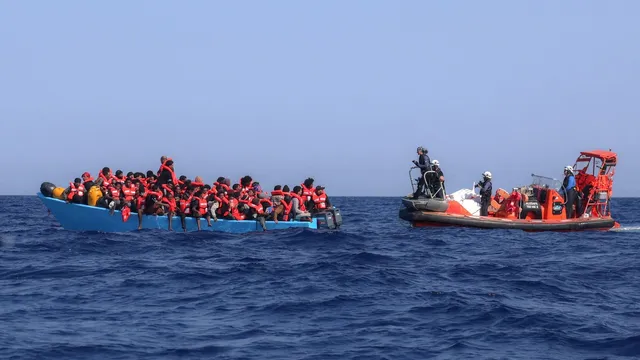
Tragic Channel crossing deaths reveal failings of UK and French authorities
- In November 2021, over 30 people drowned during a small boat crossing in the Channel.
- An inquiry revealed that the failure of the French navy to respond to a Mayday call and misunderstandings within HM Coastguard delayed rescue efforts.
- The tragedy highlights critical failings in both UK and French responses to maritime emergencies, emphasizing the need for policy changes.
Story
In November 2021, a devastating maritime disaster occurred in the Channel, leading to the drowning of more than 30 people during a perilous crossing. The incident involved an overcrowded boat that took on water about four hours into its journey towards the UK. Sir Ross Cranston, who led the inquiry into the tragedy, attributed the high death toll to several critical failures by both UK and French authorities. Notably, the French navy's warship, the Flamant, failed to respond to a Mayday call despite being in close proximity. The inquiry revealed that this omission, coupled with a prevailing belief among HM Coastguard that migrants often exaggerate the dangers of their situation, contributed significantly to the delayed rescue efforts. The preliminary chaos ensued when the UK coastguard mistakenly believed that the distressed vessel had been rescued when it had not, leading to the premature conclusion of search operations. Sir Ross noted that had the rescue operations continued, lives could have been saved. Eventually, the authorities learned the extent of the tragedy only hours later when a fishing vessel discovered the bodies in the water. Eyewitness accounts indicated that the majority of the deceased hailed from the Kurdistan region of Iraq, with other nationalities present on board as well. The distressing testimonies from survivors underscored the dire conditions faced during the crossing. Issa Mohamed Omar, one such survivor, detailed a harrowing struggle for survival that emphasized the desperation of those aboard. Their fates, intertwined with systemic failures of maritime authorities, cast a spotlight on a broader issue concerning the handling of migrant crossings. In the aftermath of this maritime tragedy, the inquiry findings could potentially lead to significant changes in operational protocols within the HM Coastguard and the French coastguard, aiming to enhance response measures to distress calls in the future. The ongoing investigation by French authorities into the Flamant's inaction raises questions about accountability and responsibility among maritime agencies overseeing such perilous crossings. With an increasing number of migrants risking their lives in treacherous conditions to reach safety, this incident serves as a poignant reminder of the urgent need for improved international cooperation and effective policies to prevent similar tragedies from occurring in the future.
Context
The refugee crisis and migration routes to Europe have become prominent issues in recent years, significantly impacting the political, social, and economic landscape of the continent. Driven by a combination of conflict, persecution, and dire economic conditions, millions of individuals from regions such as the Middle East, Africa, and South Asia have attempted perilous journeys to seek safety and a better life in Europe. The Syrian civil war, the instability in Afghanistan, and various conflicts in sub-Saharan Africa have been crucial factors propelling this migration. As families flee violence and insecurity, the influx of refugees has tested the capacities and moral imperatives of European nations, leading to differing responses that reflect national interests, humanitarian obligations, and domestic politics. Migration routes to Europe have transformed over the years, adapting to both changing geopolitical conditions and the responses of border controls. Traditionally, many migrants made their way through the Mediterranean Sea, often using overcrowded and unsafe boats operated by smugglers. Notably, the Central Mediterranean route, connecting North Africa to Italy, has been one of the most utilized. In recent years, the Eastern Mediterranean route has also gained prominence, with many migrants traveling from Turkey to Greece. Beyond the Mediterranean, overland routes through the Balkans have served as critical pathways to reach Northern and Western Europe. Despite the numerous dangers and challenges faced during these journeys, such as harsh weather conditions, exploitation by human traffickers, and the risk of drowning, many migrants deem the risks worthwhile in search of safety and opportunity. The European Union (EU) has struggled with creating a cohesive and effective response to the refugee crisis. Initial reactions included a temporary open-door policy and humanitarian assistance measures. However, the increasing numbers of arrivals and political opposition in several member states have led to stricter border controls, regressive policies, and a focus on externalizing migration management through agreements with third countries. The 2016 EU-Turkey deal exemplifies this, where the EU agreed to assist Turkey financially in exchange for preventing migrants from entering Europe. Furthermore, the rising prevalence of far-right political movements in several EU countries has complicated the situation, pushing for more restrictive immigrant policies, anti-refugee rhetoric, and an overall paradigm shift in public perception regarding migrants. As we analyze the current state of the refugee crisis and migration routes to Europe in the context of 2026, it is evident that this issue is multi-faceted and continues to evolve. With ongoing conflicts and climate-related issues potentially exacerbating the crisis, the need for a more comprehensive, compassionate, and coordinated approach remains critical. Solutions must incorporate international cooperation, uphold human rights, and work towards addressing the root causes of migration. Achieving a delicate balance between national interests and humanitarian responsibilities will be essential for fostering peace, security, and dignity for all individuals seeking refuge and a chance for a better future.
