

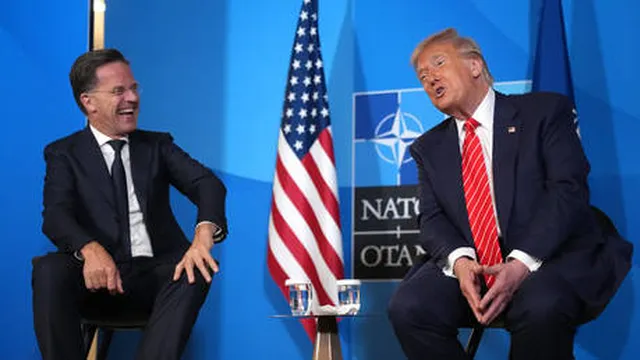
Mark Rutte promises to assist Trump on Greenland issue
Mark Rutte promises to assist Trump on Greenland issue
- Text exchanges between Donald Trump and European leaders regarding Greenland were publicly released.
- Mark Rutte expressed support for Trump's Greenland ambitions and promised to help resolve the dispute.
- The release of these communications highlights the changing landscape of international diplomacy and its impact on NATO relationships.
Story
On January 18, 2026, a series of text exchanges between Donald Trump and European leaders about Greenland were made public after a freedom of information request by the BBC. The texts highlight the ongoing discussion regarding the status of Greenland, a territory that Trump has long expressed interest in, citing its strategic importance for U.S. defense. The release included a message from Norwegian Prime Minister Jonas Støre, who emphasized the necessity for NATO to assist the United States while suggesting a collective effort to de-escalate tensions in various regions such as Gaza and Ukraine. In subsequent messages, French President Emmanuel Macron raised concerns regarding Trump's actions related to Greenland, indicating a discord in diplomatic communications. He suggested the establishment of a G7 meeting to include critical discussions on international issues, demonstrating his commitment to traditional diplomatic engagement despite the unpredictability of Trump's public style. Macron's intention was to foster working relationships and dialogue with allies, which is complicated by Trump's tendency to share private communications on social media. Adding to this complex dialogue, Mark Rutte, NATO chief and the longest-serving spokesperson of the organization, praised Trump’s achievements in global diplomacy. He committed to finding a resolution regarding the Greenland matter, aligning with Trump's aspirations. However, this exposure of private messages has raised concerns among diplomats about the erosion of confidential communication in international relations, as traditionally sensitive discussions may now be subject to public scrutiny. The Greenland dispute, highlighted as a contentious issue at the World Economic Forum in Davos, Switzerland, has caused friction with European NATO partners who are resistant to any shifts in the urban territories. The local Danish government has asserted that Greenland's status is non-negotiable, and outside military interventions are viewed as threats to their sovereignty. This diplomatic incident underscores the challenges faced by leaders navigating a paradigm where personal relations and public communications intersect, leading to complications in international diplomacy and real-time responses to crises.
Context
Greenland, the world's largest island, has a complex and evolving political status shaped by its historical ties to Denmark and its drive for increased autonomy. Originally inhabited by Inuit peoples, Greenland has been under various colonial influences since the 10th century. The island became a Danish colony in 1814 following the Treaty of Kiel, which established Danish control over Greenland, along with the Faroe Islands and Iceland. As a colony, Greenland’s governance was characterized by limited local administration, primarily managed from Copenhagen, which resulted in a disconnect between the island's inhabitants and their governing authorities. The mid-20th century marked a significant shift in Greenland’s political landscape, as the island was strategically important during World War II and the Cold War. After the United States established military bases in Greenland during the war, the island gained increased visibility on the global stage. In 1953, Greenland was incorporated as an integral part of the Kingdom of Denmark, which allowed Greenlanders access to Danish social services and instituted a more representative local government. However, this transition did not eliminate underlying tensions regarding autonomy and self-determination. In 1979, the Home Rule Act established a framework for self-government, giving Greenland significant authority over its internal affairs while Denmark retained control over foreign affairs and defense. This legislative change was a pivotal point in Greenland’s quest for autonomy, allowing Greenlanders to govern areas such as education, health, and natural resources. The growing sentiment for independence gained momentum in the early 21st century, prompting the establishment of the Self-Government Act in 2009, which further expanded local powers and offered a pathway toward potential independence in the future. As of early 2026, Greenland continues to navigate its political status within the context of its relationship with Denmark. The island's legislature, the Inatsisartut, governs local matters, but significant powers, including foreign relations and military defense, remain with Denmark. Discussions around independence continue, fueled by Greenland's vast natural resources and the global interest in Arctic development. The aspirations for full autonomy reflect not only a desire for self-determination but also a response to the socio-economic challenges faced by Greenlanders, including addressing climate change and fostering sustainable development.


