

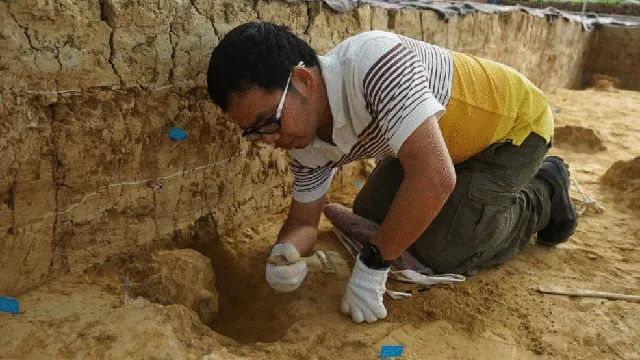
Ancient skulls challenge our understanding of human evolution in China
Ancient skulls challenge our understanding of human evolution in China
- Recent research re-dated the Yunxian skulls to approximately 1.77 million years old, the oldest in East Asia.
- This discovery suggests that hominins may have migrated across regions like China and Georgia earlier than previously thought.
- The new dating offers insight into the complexity of early hominin evolution and challenges existing theories about migration.
Story
In recent research, the Yunxian skulls from China have been re-dated to 1.77 million years ago, making them the oldest hominin remains in East Asia. This new dating has implications for our understanding of hominin migrations, suggesting a rapid spread across regions like Georgia and central China. The findings indicate that hominins, such as Homo erectus and possibly earlier species like Homo habilis, may have been present in various parts of Asia much earlier than previously believed, challenging conventional timelines of human evolution. Prior theories suggested that Homo erectus was the first hominin to leave Africa, but new discoveries of stone tools in China, dating back to 2.1 and 2.43 million years ago, indicate that earlier hominins might also have made significant migrations. Researcher Christopher Bae emphasized that either the origin of Homo erectus needs to be pushed back, or other hominin species could have been the true pioneers in leaving Africa. The Yunxian fossils have reignited debates about human ancestry, especially considering previous studies that connected these skulls to Denisovans, an enigmatic group of hominins. However, with the revised dating, they no longer appear to be close relatives, further complicating our understanding of hominin relationships. It’s clear that prior to our species emerging, multiple hominin species were diverging and adapting in different regions. While crucial findings have been made, the context of early human existence is still being explored. The existence of older artifacts without accompanying fossils complicates the narrative and suggests that research is far from complete. There’s substantial potential for discovering more evidence of early human life in areas where recent excavations have yielded significant findings. Continued exploration of older sedimentary layers could uncover additional hominin remains and further reshape our timelines.


