

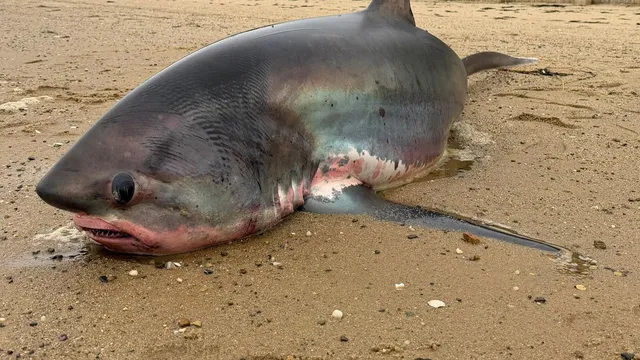
Thresher shark dies after stranding in shallow Massachusetts waters
Thresher shark dies after stranding in shallow Massachusetts waters
- A 14-foot thresher shark was first sighted stranded off Mayo Beach in Wellfleet, Massachusetts.
- Despite rapid response efforts by the New England Coastal Wildlife Alliance, the shark died just before they arrived.
- The incident highlights the risks marine animals face during migration as they can become stranded and suffer from cold shock.
Story
In the previous days, a 14-foot thresher shark was spotted stranded in shallow water off Mayo Beach in Wellfleet, Massachusetts. Responding to calls about the potentially live shark, the New England Coastal Wildlife Alliance (NECWA) dispatched a team to the scene. Unfortunately, the shark died shortly before the team arrived to attempt a rescue. Photographs show the shark lying on the beach with visible injuries and an elongated tail, indicative of its species. The shark was already in a poor condition when it was initially spotted. Trawling conditions revealed that the strandings of thresher sharks in New England are not uncommon, especially during the colder months. As these animals migrate to escape declining water temperatures, they sometimes enter areas where they become trapped. In this instance, it was noted that the shark, likely navigating towards warmer waters, found itself restricted within Wellfleet's inner harbor. "Like many marine animals, this shark took a wrong turn and ended up in Wellfleet's inner harbor," said Krill Carson, Marine Biologist and President of NECWA. Additionally, the current water temperatures around Cape Cod were reported to be below 50 degrees Fahrenheit, further compounding the risk of cold shock for the shark. Unlike some marine species that can endure fluctuating environments, thresher sharks are particularly vulnerable to prolonged cold exposure. Once stranded, their chances of survival diminish rapidly, leading to many fatalities during the fall migration period. As part of NECWA’s response, they conducted a necropsy on the deceased animal to gather further data about its condition prior to stranding. The team regularly investigates strandings to understand better why marine animals become beached along the Massachusetts coastline. This incident serves as a reminder of the fragility of marine ecosystems, especially as climate patterns influence shark migration and the frequency of strandings.


