

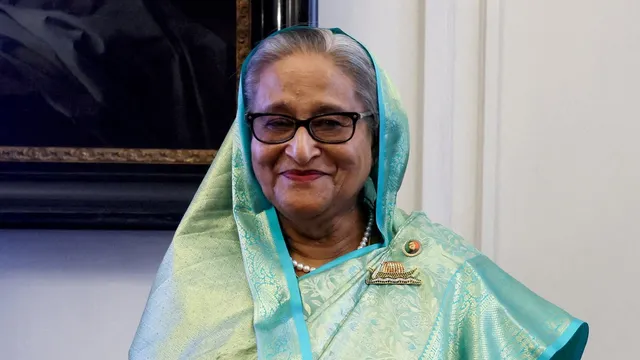
Sheikh Hasina sentenced to death for ordering crackdown on protesters
Sheikh Hasina sentenced to death for ordering crackdown on protesters
- A Bangladesh court found Sheikh Hasina guilty of ordering a violent crackdown during last year's student protests, leading to numerous casualties.
- The trial concluded with Hasina's sentencing to death, which she claimed was a politically motivated action against her party.
- The verdict may exacerbate existing political tensions in Bangladesh as the country prepares for upcoming parliamentary elections.
Story
In Bangladesh, a court sentenced former Prime Minister Sheikh Hasina to death for crimes against humanity, including murder and ordering lethal force against student protesters during a violent uprising that occurred last year. This ruling culminated a prolonged trial held in absentia as she fled to India in August 2024 amidst escalating unrest and subsequent protests demanding her resignation. The protests erupted in July 2024, initially sparked by university students advocating for the abolition of job quotas for the relatives of war veterans but rapidly evolved into a broader anti-government movement. The violent suppression of these protests resulted in widespread casualties, with estimates of up to 1,400 deaths attributed to security forces' actions. This crackdown incited outrage both nationally and internationally, drawing condemnation from human rights organizations, including Amnesty International, and the United Nations, highlighting the indiscriminate use of force against civilians. Despite fleeing the country and facing severe allegations, Hasina continues to deny her involvement, claiming the proceedings against her are politically motivated and part of an effort to silence her party, the Awami League, which has been barred from participating in upcoming elections. Following the court's verdict, there was mixed public reaction; some celebrated the decision as a step towards justice, while others feared it might further destabilize the already fragile political situation in Bangladesh. Security has been heightened in the capital and other regions, anticipating potential unrest in response to the ruling. The interim government is working to ensure safety during this tense period as the country approaches parliamentary elections slated for early February 2026. The implications of this judgment extend beyond Hasina herself; they could reshape the political landscape ahead of the elections, particularly given that the Awami League has faced significant restrictions in their political activities. Observers have suggested that the actions of the interim government under Muhammad Yunus, the Nobel laureate leading the current regime, signal a shift towards accountability yet also a worrying continuation of political repression in the country.
Context
The political situation in Bangladesh has become increasingly tense in recent years, marked by widespread protests and civil unrest. The root causes of these issues can be traced back to concerns over political integrity, human rights abuses, and economic challenges that have intensified systemic dissatisfaction among various segments of the population. The ruling party, the Awami League, led by Prime Minister Sheikh Hasina, has faced accusations of undermining democracy through electoral manipulation, suppression of dissent, and curtailment of free speech. As the country approaches elections, tensions have risen further, leading to violent confrontations between protesters and law enforcement, as well as internal divisions within opposition groups that are struggling to present a unified front against the government. Public trust in state institutions, such as the judiciary and law enforcement agencies, has eroded as allegations of corruption and partisanship have become more commonplace, complicating the prospects for political reconciliation. Recent protests have been characterized by their scale and organization, with thousands of citizens taking to the streets to voice their grievances. Key issues driving these protests include demands for fair elections, better governance, socioeconomic inequalities, and justice for victims of violence and repression. In many instances, the protests have turned violent, resulting in clashes with police and the tragic loss of life, which further fuels the cycle of retaliation and unrest. International human rights organizations have closely monitored the situation, condemning the government's response to dissent and calling for accountability for abuses committed against protesters. The youth, who make up a significant portion of the populace, have played a pivotal role in the protests, utilizing social media to organize rallies and mobilize support, thereby enhancing the overall visibility of their demands. The international community has begun to take notice of the deteriorating political climate in Bangladesh, with various governments and organizations urging the ruling party to engage in dialogue with opposition leaders and prioritize reforms that would ensure a more robust democratic process. However, the government has maintained a hardline stance against dissent, often labeling protests as a threat to national security. This approach has led to a burgeoning culture of fear among activists and ordinary citizens, deterring many from actively participating in the movement for change. Notably, civil society organizations are facing substantial restrictions, and the media landscape is becoming increasingly censored, further stunting public discourse. As Bangladesh eyes its future, the path forward remains fraught with challenges. The ability to restore stability partially hinges on the government's willingness to adopt inclusive political strategies that address the underlying causes of unrest. Whether through meaningful electoral reforms, enhancing the rule of law, or fostering respect for human rights, the ruling party must consider the long-term consequences of its actions in relation to public sentiment and national unity. The forthcoming months leading up to the election will be critical in determining whether Bangladesh can navigate its current turmoil or succumb to further divisions and conflict.


