

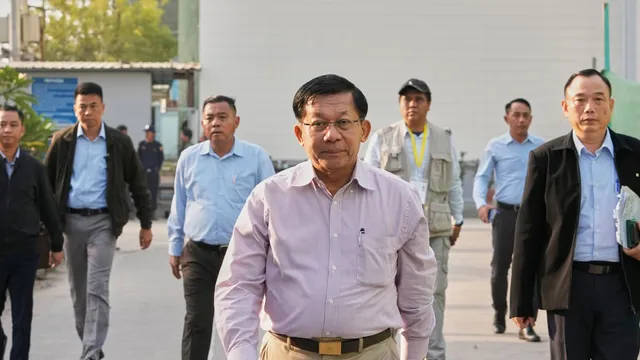
Myanmar junta enacts plans to retain military power despite elections
Myanmar junta enacts plans to retain military power despite elections
- Myanmar's junta-backed USDP won 739 out of 1,025 available seats in recent elections.
- The elections were criticized for their lack of fairness and exclusion of opposition parties.
- Experts predict that the establishment of a new council will strengthen junta control while claiming a civilian governance facade.
Story
Myanmar has held elections amid ongoing political turmoil, with a junta-backed party, the Union Solidarity and Development Party (USDP), winning a significant majority of seats in the parliament. The elections, which took place in three phases from December 28, 2023, to January 25, 2024, saw approximately 13.1 million of 24.2 million eligible voters participate, resulting in a voter turnout of about 55 percent. The legitimacy of these elections has been widely questioned by both the United Nations and various international observers who have labeled them as neither free nor fair. The National League for Democracy, which had won prior significant elections in 2015 and 2020, was banned from participating, further casting doubt on the electoral process. Critics argue that the current military regime is using this election as a facade to maintain its grip on power while presenting an image of an elected government. Following the elections, plans were announced to form a Union Consultative Council that would enable Senior General Min Aung Hlaing to assume the presidency without relinquishing his control over the military. Experts believe this newly formed council will have significant authority over national security and legislative processes, thus ensuring that the military remains an influential force in Myanmar's political landscape. Throughout this tumultuous period, Myanmar continues to experience conflict and civil unrest as resistance to military rule persists, leading to a considerable loss of life. Just weeks after the final election phase, the junta's move to establish the council is seen as a strategic maneuver to solidify its power and suppress dissent within the country.
Context
The current situation of Myanmar military rule is marked by extensive political turmoil and widespread human rights violations. Following the military coup in February 2021, the Tatmadaw (Myanmar armed forces) overthrew the democratically elected government, leading to significant unrest across the country. Despite the initial promise of restoring stability, the military junta's actions have resulted in an escalated conflict with opposition groups, particularly the National Unity Government (NUG) and various ethnic armed organizations. The military regime has responded to resistance with increasing brutality, employing aerial bombardments, ground offensives, and mass arrests of dissenters, significantly contributing to a deteriorating humanitarian crisis in Myanmar. Reports indicate that thousands have been killed or imprisoned, while millions are displaced due to the ongoing violence. The international community has largely condemned the military's actions. Economic sanctions have been imposed by several countries, including the United States and Canada, targeting key military leaders and associated enterprises. However, these measures have had limited effectiveness in altering the junta's course of action. Regional organizations like ASEAN have sought to mediate, but their efforts have yielded little success in promoting dialogue or easing tensions. Instead, the military continues to consolidate power and suppress dissent, exemplifying a disregard for both national and international governance norms. The economy has been severely impacted, with inflation rising and essential services collapsing under military rule, exacerbating the struggles faced by ordinary citizens. Humanitarian access remains a significant concern, as the military has restricted aid organizations from providing much-needed support to affected populations. Many communities are facing food shortages, lack of medical care, and displacement due to ongoing military operations. International humanitarian organizations have urged for the protection of civilians and unfettered access for aid workers, yet responses from the military government have been slow and insufficient. These challenges are compounded by the COVID-19 pandemic, which has strained the already fragile healthcare infrastructure, leaving many at risk of both the virus and the subsequent economic downturn. In summary, the situation in Myanmar under military rule is characterized by severe repression, widespread human rights abuses, and an escalating humanitarian crisis. The junta's strategies to maintain control have led to significant internal conflict and a lack of stability, affecting nearly all aspects of life in the nation. As the international community contemplates further responses, the need for a unified and coherent approach to support the restoration of democracy and protect human rights in Myanmar has never been more urgent.


