

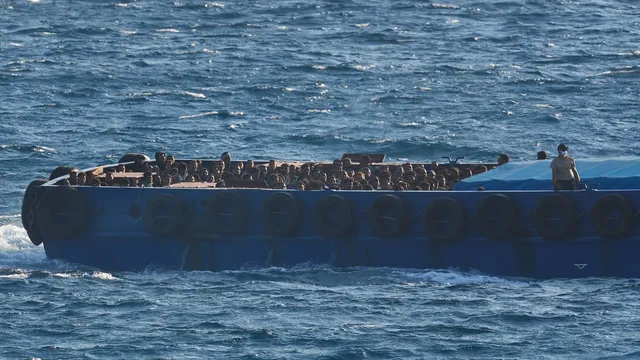
Seventeen migrants confirmed dead after boat capsizes near Crete
Seventeen migrants confirmed dead after boat capsizes near Crete
- Seventeen bodies have been recovered following a migrant boat capsizing incident off Crete.
- The boat initially carried 34 individuals but suffered engine failure, leading to a dangerous situation.
- This incident highlights the ongoing humanitarian crisis due to migration across the Mediterranean Sea.
Story
In a tragic incident off the coast of Crete, Greece, a migrant boat capsized recently, leading to the recovery of seventeen bodies. The boat had set sail from Tobruk, Libya, on the night of December 1, 2025, with a total of 34 individuals on board. The Greek coast guard was alerted to the situation when a Turkish merchant ship spotted the half-submerged vessel approximately 41 miles southwest of Ierapetra, a town in southern Crete. Efforts to rescue survivors and locate the missing were affected by severe weather conditions in the area. Among the passengers, two survivors managed to reach safety and later informed authorities that 34 individuals were initially on the boat before it encountered engine failure and began to drift. Unfortunately, during the incident, 15 people went missing after falling into the sea. The search and rescue operation by Greece's coast guard commenced, but strong winds and rough seas have complicated the mission. The grim discovery of seventeen deceased individuals, all men, suggests that the death toll may rise as it is feared that the five additional individuals are also lost at sea. In the aftermath of this incident, the recovered bodies were taken to a mortuary in Crete for post-mortem examinations, while the survivors were transported to a hospital to receive medical attention. The rising number of fatalities from migrant crossings in the Mediterranean Sea is alarming, highlighting the dangers faced by those attempting to reach Europe. Greece remains a critical entry point for migrants fleeing dire situations in regions such as the Middle East, Africa, and Asia. This tragic event reflects the broader context of increased migration across the Mediterranean as individuals seek refuge from conflict and poverty. The dangers of such journeys have increased, especially as migrants have shifted routes to escape heightened patrols and policies such as pushbacks enacted by Greek authorities. Many are now opting for longer and more perilous crossings from North Africa, using unseaworthy vessels that are often ill-equipped for the treacherous journey ahead.
Context
Migration from Libya to Europe has been shaped by a complex interplay of socio-economic, political, and environmental factors. Libya's strategic geographical location, lying just across the Mediterranean Sea from Europe, has made it a key departure point for numerous migrants attempting to reach European shores in search of safety and better economic opportunities. Over the past decade, increased instability and civil strife within Libya have exacerbated this trend, with many migrants viewing the country as a transit zone rather than a final destination. This movement is fueled by various crises in sub-Saharan Africa, where ongoing conflicts, human rights abuses, and economic hardship compel individuals and families to embark on perilous journeys across the Mediterranean Sea in pursuit of a better life in Europe. The routes taken by migrants from Libya to Europe can vary, but they commonly include traversing the dangerous Mediterranean waters on overcrowded and often unseaworthy vessels. These journeys are fraught with dangers, including the risk of capsizing, drowning, and encountering human traffickers who exploit vulnerable migrants. In recent years, the Mediterranean Sea has become one of the deadliest migration routes in the world, with thousands losing their lives each year while attempting the crossing. Efforts by various governments and organizations to rescue migrants at sea and combat trafficking have produced mixed results, with concerns about the treatment of migrants upon arrival in Europe and in detention centers in Libya remaining prominent issues. European countries have grappled with how to respond to the influx of migrants arriving from Libya. While some nations advocate for more inclusive policies and humane treatment of migrants, others push for stricter border controls and deterrence measures, resulting in a fragmented and often contentious migration policy landscape. Initiatives such as the European Union's naval missions aim to tackle human smuggling networks and enhance search-and-rescue operations, yet they also raise ethical questions regarding the responsibilities of European nations towards migrants and the conditions in which they are detained or returned. Overall, understanding the migration routes from Libya to Europe requires an appreciation of the underlying factors driving individuals to leave their homes as well as the dangers they face along the journey. Effective and humane responses to migration can only be developed through a comprehensive approach that addresses not only the immediate challenges of crossing the Mediterranean but also the root causes of migration, such as economic disparity, political instability, and human rights violations in the migrants' countries of origin. Collaboration between Libyan authorities, European nations, and international organizations is essential for establishing safe and legal pathways for migration, ensuring the protection of migrants, and ultimately addressing the broader geopolitical dynamics at play.


