

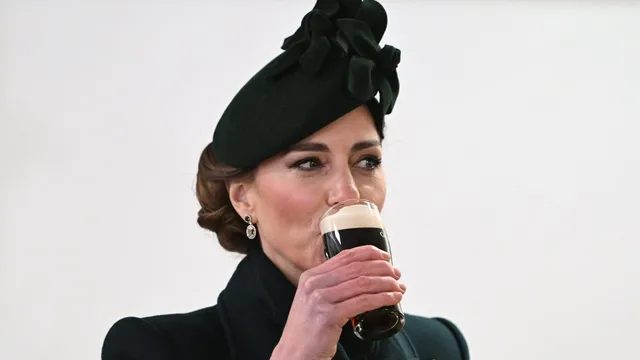
St. Patrick's last request sparked drinking traditions worldwide
St. Patrick's last request sparked drinking traditions worldwide
- St. Patrick's Day is celebrated on March 17, marking the anniversary of St. Patrick's death in A.D. 461.
- The holiday has evolved with a significant commercial aspect in places like the United States, where alcohol consumption skyrockets.
- In Ireland, there remains a profound cultural and religious significance attached to the celebrations that many outside the country may overlook.
Story
In Ireland, March 17 is celebrated as a day of significance, thanks to the legacy of St. Patrick, the country’s beloved patron saint, who is said to have passed away in A.D. 461. Historical accounts related to St. Patrick are often mixed with legends, making it challenging for scholars to piece together the actual events of his life. His journey began as a slave in Ireland, after which he returned as a missionary. Each year, thousands of pilgrims flock to places like Croagh Patrick to honor him and partake in rituals recognizing his influence. On his deathbed, St. Patrick reportedly requested a toast with 'a wee drop of whiskey,' further solidifying the significance of drinking on this occasion. While St. Patrick’s Day is now widely recognized globally, particularly in the United States, where Americans have consumed millions of pints of Guinness and spent billions celebrating, the holiday retains more profound religious and cultural meanings back in Ireland. Irish emigrants transformed March 17 into a tribute to their heritage, leading to unique American adaptations of the holiday. This commercialization diverges from the original intent, where individuals would wear shamrocks to commemorate St. Patrick’s death and celebrate Irish unity. An 82-mile pilgrimage trail, recognized as Saint Patrick's Way, traces the legendary figure's steps through Northern Ireland, offering a scenic route for those who want to experience his story firsthand. This hike encompasses various landscapes and locations linked to St. Patrick’s life, enhancing the authentic cultural experience for walkers and promoting acknowledgment of the deeper significance of this holiday. However, amidst the festivities, the actual story of St. Patrick often gets overshadowed. The objective of the trail is to reconnect the day with its historical roots and celebrate the essence of St. Patrick. Given his complex identity, including his non-Irish origins, it is critical for celebrants to also reflect on the man behind the myths as they raise their glasses to toast to St. Patrick’s legacy.


