

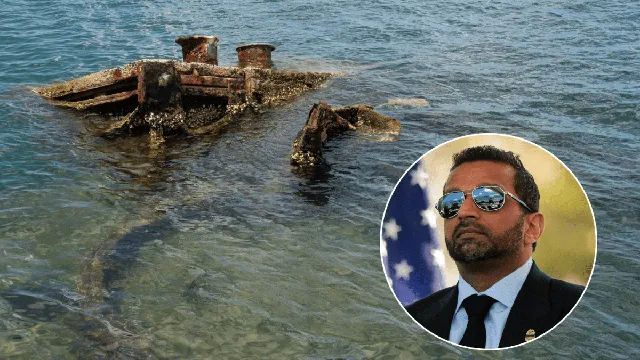
Controversy surrounds restricted access to USS Arizona site
Controversy surrounds restricted access to USS Arizona site
- The Navy and National Park Service strictly control access to the waters above the USS Arizona due to its designation as a mass grave.
- A rare snorkeling trip by FBI Director Kash Patel raises concerns about the accessibility of this historically significant site.
- The restrictions are rooted in respect for the 900 service members who remain entombed in the wreck.
Story
In the United States, the USS Arizona remains a unique and heavily regulated dive site due to its designation as a mass grave following the Pearl Harbor attack on December 7, 1941. During this tragic event, the USS Arizona was destroyed when a bomb ignited its ammunition, resulting in a catastrophic explosion that claimed the lives of 1,177 sailors and Marines, with over 900 still unaccounted for. The site has since been treated with profound respect, serving as both a memorial and a burial ground, where surviving crew members may have their ashes interred within the ship itself. In recent developments, FBI Director Kash Patel participated in a rare snorkeling trip near the wreck, raising significant questions about access to this heavily guarded body of water. The visit was coordinated through military channels and was among the few exceptions allowed for accessing the waters above the Arizona. Unlike other marine sites, the waters above the USS Arizona are off-limits for recreational activities, established not only for preservation purposes but also to honor the remains of those entombed within the wreck. The strict regulations surrounding the site are a direct result of the tragic loss of life associated with the ship. After World War II, several efforts to recover the remains of soldiers were deemed impossible due to the extensive damage, leading officials to designate the USS Arizona as a final resting place. This designation prioritizes memorialization, meaning that the sacredness of the site is paramount over any exploratory objectives. Such policies aim to maintain the dignity and respect owed to the sailors who lost their lives during the attack. Access to the area is tightly controlled by the U.S. Navy and the National Park Service, primarily to ensure that the site is treated with the reverence it deserves. Ceremonial visits, such as when the ashes of deceased survivors are placed in the ship, are permitted under strict supervision, reflecting the site's deep-rooted significance. Furthermore, a limited number of supervised visits for dignitaries are sanctioned but come with explicit guidelines to maintain distance from the wreck. The Arizona continues to symbolize the impacts of war and remains a poignant reminder of the past, still leaking oil, sometimes referred to as 'black tears,' into Pearl Harbor, which serves as a stark reminder of the events occurred in 1941.
Context
geopolitical analysis data trends strategic impact analysis global trends analysis strategic data analysis trends shift trends trends geopolitical strategic data impact analysis global strategic trends shift economic economic policy economic economic market market shift strategic strategic insight shift strategic analysis economic policy policy geopolitical market strategic impact impact global insight economic geopolitical data impact data impact policy economic global geopolitical trends trends insight analysis analysis analysis global strategic insight economic analysis data policy market market market impact trends analysis analysis...


