

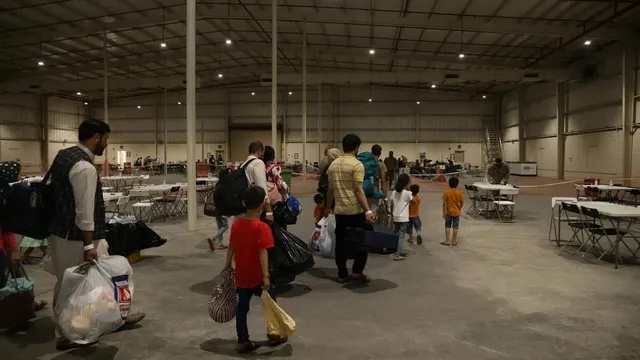
US pays Afghans to leave Qatar camp amid controversy
US pays Afghans to leave Qatar camp amid controversy
- The US State Department is offering financial incentives for Afghans to return from a long-standing camp in Qatar.
- Critics claim the repatriation is not truly voluntary and fear for the safety of returning individuals.
- This repatriation plan has sparked controversy and backlash from advocacy groups and lawmakers who see it as a betrayal.
Story
In February 2026, it was revealed that the US State Department initiated payments for Afghans to voluntarily repatriate from a camp in Qatar, where they had been held for years. This camp, located at the former US Army base Camp As Sayliyah, housed more than 1,100 individuals since at least 2025. The influx of these Afghan refugees coincided with the halting of the resettlement process for those fearing Taliban retribution, a decision made under former President Donald Trump's administration. Many individuals within this group comprised civilians, women who served alongside US forces, and family members of American service members, all facing significant dangers upon returning to Afghanistan. The assistant secretary of state for South and Central Asia, S. Paul Kapur, mentioned that around 150 Afghans had accepted the offered payments to return home, though the fate of these individuals post-return remains unknown. Advocates criticized the repatriation plan, asserting that Afghans were being coerced into accepting the financial incentive due to uncertain relocation prospects to third countries. This controversy emerged as prominent Democrats labeled the payment offer a betrayal of Afghan allies who had assisted the US in its two-decade military campaign in Afghanistan. Critics, including Democratic lawmakers, argue that the approach undermines commitments made to Afghan allies and places them at risk if they return to Afghanistan. They called into question the ethics of offering financial incentives for self-deportation, proposing that a more viable solution would involve resettlement to safer locations outside Afghanistan. The State Department's representative, while maintaining that repatriation was voluntary, acknowledged the complexities of prolonged detention at the Qatari facility, arguing that keeping individuals indefinitely was not a practical solution. Negotiations for relocating these individuals to third countries are ongoing, though the outcomes are uncertain, causing outrage among advocacy groups. As the situation evolves, the response to the repatriation strategy continues to highlight tensions between the US government and former allies in Afghanistan, showcasing the delicate balance policymakers face in managing these humanitarian issues while also addressing domestic concerns. The unfolding scenario emphasizes the need for a humane and sustainable approach to the fallout from the US withdrawal from Afghanistan and its implications on international commitments to those who supported US efforts in the region.


