
Erika Kirk attends State of the Union as Trump's special guest after husband’s assassination
- Erika Kirk attended the State of the Union address as a guest of President Donald Trump following her husband's assassination.
- Trump invited a diverse group of guests to highlight varying political issues, including victims of violence and advocates affected by immigration policies.
- The event showcased the deep political polarization in America, reflected in the differing narratives between Trump's supporters and Democratic critics.
Story
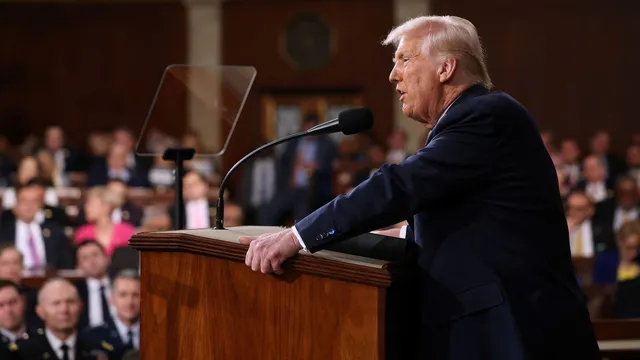
The State of the Union address, presented by President Donald Trump, featured various guests, including Erika Kirk, the widow of Turning Point USA founder Charlie Kirk. This event took place weeks after Charlie's tragic assassination at a debate event on September 10, 2025. The administration expressed strong support for Erika, who was an important figure at the event, reflecting the ongoing political tensions related to the violence experienced since Trump's 2024 campaign. Other guests included families of victims of violence and individuals impacted by immigration issues, showcasing contrasting narratives of support and dissent from differing political factions. Erika Kirk's presence symbolized the resilience following her husband's death, which had shocked many in the conservative movement. At the memorial service, President Trump referred to Charlie Kirk as a martyr for American freedom, encapsulating the deep impact his legacy had on Trump’s base. Trump further emphasized the importance of rejecting political violence during his address, highlighting the government's responsibility to uphold safety for all citizens. As the political landscape evolves, the implications of violence in political discourse remain critical, particularly for those personally affected by such tragedies. The choice of guests at the State of the Union serves as a microcosm of America’s heightened political polarization, where the narratives of Trump's supporters and critics juxtapose vividly. Alongside Erika, other guests included individuals affected by direct violence due to immigration enforcement, emphasizing the complex and often contentious policies surrounding immigration. Democratic lawmakers' guests contrasted sharply with Trump’s invitees, as they highlighted survivors of abuse and those adversely impacted by ICE actions, further intensifying the Democratic stance against the administration's policies. Overall, the event was less about policy discussion and more a display of political allegiance in a divided America. The President’s call for unity amidst turmoil was poignant, as this struggle transcends individual political agendas, representing the broader ideological battles that shape contemporary American citizenship. As Erika Kirk navigates her new reality without her husband, her visibility at such prominent events underscores the ongoing need for dialogue around political violence and its ramifications on society, particularly within the context of how grief intertwined with political identity is understood in American life.
Context
The impact of political violence on American politics has been profound and multifaceted, particularly in recent years. Political violence, characterized by acts intended to instill fear, disrupt governmental processes, or coerce political outcomes, has escalated in various forms across the United States. This violence can manifest through domestic terrorism, civil unrest, and targeted attacks on political figures or institutions. Such incidents not only reflect underlying societal tensions but also shape the political landscape, influencing voter behavior, party dynamics, and policy discussions. The emergence of extremist groups, the normalization of aggressive rhetoric, and increasing polarization have all contributed to an environment where political violence is seen as an acceptable means of expression by a troubling segment of the population. This normalizing effect has led to a cycle where fear and distrust become pervasive, further entrenching divisive politics and undermining democratic processes. As evidenced by recent events, fear of violence can deter participation in political discourse, decrease voter turnout, and inhibit healthy debate, placing American democratic ideals at risk. The consequences of political violence extend beyond immediate physical harm; they permeate the fabric of political trust and civic engagement. The psychological impact of such violence generates an atmosphere of fear and uncertainty among the electorate, often leading to disengagement from political processes. Individuals may feel less inclined to express dissenting opinions or participate in rallies and town halls due to concerns about potential violence. This disengagement disproportionately affects marginalized groups who already face systemic barriers in the political sphere. As political participation wanes, the diversity of voices that shape policy diminishes, risking the further alienation of already disenfranchised communities. Political polarization exacerbates this situation, making it easier for extremist ideologies to gain traction and legitimate the use of violence as a tactic in political discourse. Moreover, political violence influences legislative action and national security policies. The government may respond to incidents of political violence with increased security measures, surveillance, and law enforcement, potentially leading to overreach and infringements on civil liberties. This reaction can further alienate individuals from the political process and undermine trust in institutions. Additionally, political violence can create a rallying point for certain factions, prompting groups to portray themselves as defenders against perceived threats, thereby justifying violent actions under the guise of political activism. This dynamic risks entrenching division within the electorate, perpetuating a cycle of violence fueled by resentment and fear. Efforts to address the impact of political violence on American politics require a multifaceted approach. Initiatives aimed at fostering dialogue and understanding among differing political ideologies, promoting civic education, and reinforcing democratic norms are vital. Addressing the root causes of political violence, such as inequality and social injustice, through policy changes can help mitigate tensions. Additionally, fostering a culture of peaceful dissent and protecting the rights of individuals to express divergent views without fear of reprisal is essential for bolstering democratic resilience. Ultimately, the challenge lies in restoring faith in democratic processes, ensuring that political discourse remains civil and constructive, and reaffirming a collective commitment to non-violence as the foundation of American democracy.
