

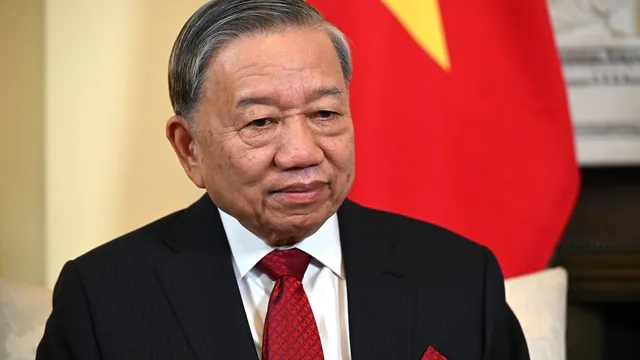
To Lam targets expanded powers during Vietnam's critical party congress
To Lam targets expanded powers during Vietnam's critical party congress
- The Communist Party's national congress in Vietnam began on January 19, 2026, with approximately 1,600 delegates in attendance.
- To Lam aims to strengthen his position by potentially combining the roles of party chief and state president.
- The congress will determine Vietnam's leadership and economic direction for the next five years amidst various global challenges.
Story
In Vietnam, the Communist Party's national congress commenced on January 19, 2026, gathering around 1,600 delegates in Hanoi. This once-in-five-years event is crucial for determining the nation's top leadership and setting its future political and economic directions. During this congress, To Lam, the incumbent general secretary, aims to consolidate his power by possibly combining the roles of party chief and state president. Since his previous election, he has pushed significant reforms focusing on economic growth and bureaucratic efficiency amidst various global challenges. The congress is held under strict security measures, including blocked internet access and issued tablets limited to intranet functions, ensuring that the meeting remains confidential. The main agenda focuses on electing approximately 200 members to the Central Committee, which will subsequently appoint key Politburo members, including the general secretary. Observers speculate that Lam's re-election to a full five-year term is highly likely but debate remains regarding whether he will also succeed in securing the presidency. To Lam has been credited with an ambitious reform agenda that aims for Vietnam to achieve an annual average GDP growth of over 10% by 2030. This goal comes after the country fell short of its 6.5% to 7.0% target in the first half of the decade due to a combination of internal and external challenges, including global economic conditions and trade disputes. The reform plans underscore Vietnam's reliance on the private sector and the importance of integrating technology and modern production methods to advance the economy. Moreover, the impacts of geopolitical tensions, particularly between the U.S. and China, complicate Vietnam's position as a key player in global markets. While the congress facilitates leadership selection, it also serves as a platform for To Lam to reinforce his economic strategy which involves minimizing bureaucratic red tape and focusing on expanding international trade. As part of his vision, Lam emphasizes the necessity for political stability and coherent economic policies to navigate the complexities posed by a competitive global landscape. He aims to maintain support from various party factions amid internal opposition, including conservatives who are wary of rapid reforms potentially veering away from socialist principles. The outcome of this congress will significantly shape Vietnam's political and economic trajectory leading up to 2031.
Context
The Communist Party of Vietnam (CPV) plays a dominant role in the political landscape of Vietnam, serving as the only legal political party in the country since its founding in 1930. This monopoly on power is rooted in the party's historical significance and its leadership in the struggle for national independence, which culminated in the establishment of the Democratic Republic of Vietnam in 1945. The CPV's governance model combines Marxist-Leninist principles with national characteristics, emphasizing socialist political ideology, economic management, and the promotion of Vietnamese culture. The party's framework centers on the concept of democratic centralism, where central authorities make key decisions that are binding on all party members, ensuring a unified direction in policy-making and governance. This structure supports the CPV's objective of maintaining stability and continuity in national leadership, which is considered essential for the country's growth and development. The role of the CPV extends beyond mere political leadership; it is deeply intertwined with various state institutions and civil society. The party influences all levels of governance, from the central government down to local administrations, ensuring that party policies and directives are implemented across the nation. Members of the CPV occupy key governmental positions, including the presidency, the prime ministership, and other significant ministries, which allows the party to maintain control over Vietnam's legislative, executive, and judicial branches. The CPV also plays a vital role in shaping the national agenda, prioritizing economic reforms, social equality, and national defense, while also advocating for Vietnam's increased engagement on the global stage. In recent years, the CPV has recognized the importance of economic development and modernization, promoting a socialist-oriented market economy that has led to remarkable economic growth. This pragmatic shift has allowed Vietnam to integrate into the global economy while maintaining the CPV's political hegemony. The party has implemented policies that promote foreign investment and trade, leading to improvements in infrastructure, job creation, and overall living standards. However, the CPV faces challenges, such as corruption, social inequality, and the demand for political reforms, which put pressure on the party to evolve while retaining its core ideological commitments. Overall, the Communist Party of Vietnam remains a central pillar in the country's governance, navigating the complex interplay between ideology and pragmatism. Its ability to integrate economic liberalization with political control has been key to Vietnam's ongoing development, yet the future will require the CPV to adapt to new dynamics both domestically and internationally. As Vietnam continues to grow as a regional power, the role of the CPV will be tested by the challenges of modernization, the aspirations of the Vietnamese people, and the global political landscape.


