

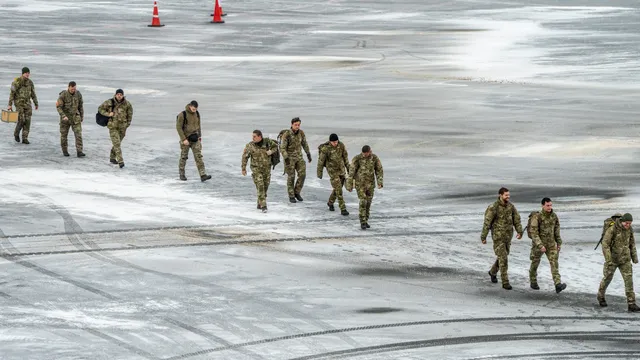
NATO strengthens Arctic presence amid Trump's Greenland ambitions
NATO strengthens Arctic presence amid Trump's Greenland ambitions
- NATO's Arctic Sentry mission aims to strengthen military presence in the Arctic amid rising tensions over Greenland.
- The UK's troop deployment in Norway will increase from 1,000 to 2,000 over three years as part of this mission.
- The initiative underscores NATO's commitment to stabilizing the Arctic region against potential threats, especially from Russia.
Story
In recent weeks, NATO has kicked off a mission named Arctic Sentry to bolster its military presence in the Arctic region, primarily following heightened tensions regarding Greenland. This initiative was prompted by former US President Donald Trump's repeated assertions about the necessity of acquiring Greenland for US national security, leading to significant pushback from Denmark and other European allies. Trump's ambitious remarks included the potential for military action and threats of tariffs against European nations resisting this acquisition. Amid these tensions, NATO's military headquarters declared the necessity for coordinated efforts among member states to address security challenges in the strategically significant and environmentally sensitive Arctic. As part of this mission, the British government has announced plans to double the number of troops deployed to Norway from 1,000 to 2,000 personnel over the next three years. Defence Minister John Healey emphasized that British forces would play a crucial role in strengthening Arctic security, which he associates with rising threats from Russia. Exercises from various NATO countries, including Denmark's Arctic Endurance activity in Greenland, are part of this coordinated approach. Contributions from France and Germany have also been mentioned, although specific troop numbers have not been disclosed. Additionally, there are ongoing preparations for a joint military exercise in September involving hundreds of troops spread across Iceland, the Danish Straits, and Norway, as part of the UK-led Joint Expeditionary Force. Member nations involved in this force include Denmark, Estonia, Finland, Iceland, Latvia, Lithuania, the Netherlands, Norway, and Sweden, with each participating country expected to assess their military needs in the context of Arctic stability. The situation underscores the alliance's commitment to ensure security and stability, particularly in light of shifting geopolitical dynamics in the region. The Arctic region is increasingly viewed as strategically significant due to its resources and geopolitical positioning. Challenges posed by climate change are also contributing to the urgency for NATO and its allies to maintain a strong military presence in this part of the world. With missions like Arctic Sentry, NATO aims to leverage its collective military capabilities to safeguard its member nations and prevent escalating tensions, ensuring that the Arctic remains a secure environment for its allies and their interests.


