

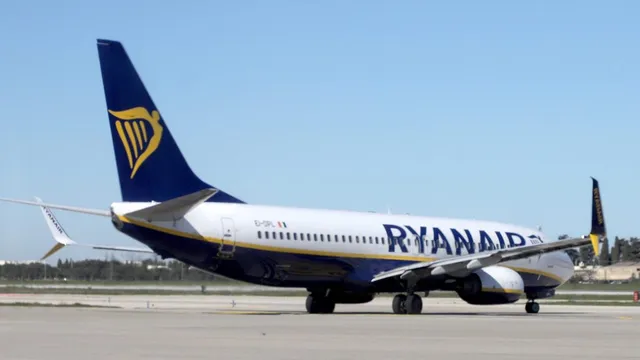
Ryanair CEO warns travelers to book flights now amid rising fares
Ryanair CEO warns travelers to book flights now amid rising fares
- Michael O'Leary indicated that up to 10% of flights might be canceled this summer due to jet fuel shortages if the Strait of Hormuz remains closed.
- He advocated booking flights immediately to avoid higher fares as the summer approaches despite the risk of potential disruptions.
- O'Leary reassured travelers that Ryanair would ensure their return and that disruptions could likely stem from air traffic control issues in Europe.
Story
In an interview with ITV News, Michael O'Leary, the CEO of Ryanair, expressed concerns about the potential for flight cancellations this summer due to rising jet fuel prices linked to geopolitical tensions in the Middle East. He stated that should the Strait of Hormuz remain closed for two to three months, between 5% and 10% of flights in May, June, and July could be affected, resulting in airlines being forced to cancel flights with little notice based on fuel availability. As jet fuel prices have surged to nearly double pre-war levels due to supply chain disruptions linked to the ongoing conflict in Iran, O'Leary noted that major U.S. airports have reported average prices around $4.88 per gallon, substantially increasing the cost for airlines and travelers alike. Despite these challenges, O'Leary advised that those planning summer trips should book their flights as soon as possible, warning that ticket prices are likely to increase further. He argued that with a high percentage of flights still expected to operate, potentially 90-95%, travelers would not be taking a great risk in booking early. O'Leary promised customers that if their flights were disrupted, Ryanair would do its best to accommodate them, emphasizing that travelers flying within Europe would not be left stranded, as the airline operates numerous flights in the region on a daily basis. However, he also acknowledged the likelihood of challenges from air traffic control disruptions in Europe this summer, which could contribute further to the complications faced by travelers.
Context
The impact of jet fuel prices on airlines is a critical aspect that influences the aviation industry’s financial health and operational strategies. Airlines are heavily reliant on jet fuel, which typically accounts for a significant portion of their operating costs. Fluctuations in jet fuel prices can therefore have profound effects on profit margins, pricing strategies, and ultimately, the sustainability of various airline operations. When jet fuel prices rise, airlines often face increased operational expenses, leading them to either absorb these costs or pass them on to customers through higher ticket prices. The volatility of fuel prices can hinder long-term financial planning, as airlines must remain agile and adaptive in a climate characterized by uncertain fuel costs, particularly in relation to geopolitical tensions and supply chain disputes that can disrupt fuel availability and pricing dynamics. To mitigate the impact of rising fuel costs, airlines have adopted several strategies. Many have invested in more fuel-efficient aircraft and optimized flight routes to minimize fuel consumption. Additionally, airlines may engage in hedging strategies, purchasing futures contracts to lock in fuel prices and protect against sudden price spikes. By effectively managing their fuel expenditure, airlines have more control over their overall operating costs, enabling them to maintain competitive pricing while safeguarding profit margins. These practices not only help airlines weather periods of high fuel prices but also contribute to a more sustainable operational model in the long run. Moreover, the economic landscape significantly affects jet fuel prices, and consequently, the airline industry's profitability. Economic recessions often correlate with reduced consumer demand for air travel, forcing airlines to cut ticket prices to stimulate sales. When demand is low, airlines are compelled to maintain operational efficiency and find ways to reduce costs without sacrificing service quality. Conversely, in times of robust economic growth, airlines may see higher demand but also face the challenge of rising fuel prices that can dampen their earnings potential, especially if they cannot raise tickets sufficiently. Hence, jet fuel prices serve as both a barometer and a catalyst for airlines' operational decisions, influencing everything from route planning to passenger pricing. In summary, the interconnectedness between jet fuel prices and airline operations underlines the necessity for airlines to develop comprehensive risk management strategies in response to fluctuating fuel costs. The ability to optimize fuel utilization and implement effective financial strategies is essential for maintaining profitability, especially in a continuously evolving economic environment. As global conditions and fuel technology continue to change, the aviation industry must remain proactive in addressing the multifaceted challenges posed by jet fuel price volatility, ensuring they can adapt and thrive amidst uncertainties.


