

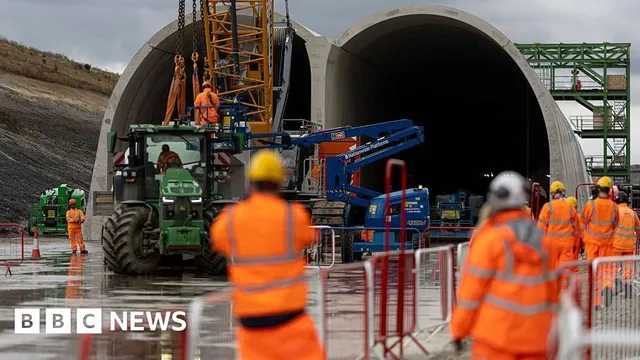
Government considers slowing HS2 trains to cut costs
Government considers slowing HS2 trains to cut costs
- The HS2 railway line from London to Birmingham is experiencing delays and significant cost increases.
- Current proposals suggest reducing train speeds from 360 km/h to 300 km/h to save billions.
- The government aims to deliver the project efficiently while minimizing taxpayer costs.
Story
In the United Kingdom, the government is contemplating reducing the operating speed of HS2 trains as a strategy to manage the project's escalating costs. Initially designed to support train speeds up to 360 kilometers per hour (224 mph), HS2 has faced significant delays and budget overruns, leading to a revised focus on cost efficiency. HS2's chief executive, Mark Wild, was expected to provide a report by mid-July assessing the implications of slower train speeds on the project’s budget and timeline. The Transport Secretary, Heidi Alexander, has expressed the need to explore all possible options to mitigate the financial burden on taxpayers while ensuring timely project completion. Reports indicate that top speeds for HS2 could be adjusted to 300 kilometers per hour (186 mph), reducing the original ideal target by roughly 16.67%. Furthermore, provisional estimates suggest that these speed adjustments could not only save billions but also allow for an earlier commencement of services, a critical factor in light of the project's current trajectory, which sees completion unlikely by the revised 2030 target. The decision to consider lower speeds is emphasized by the fact that the line has faced skepticism regarding its completion where the initial budget for the London to Birmingham segment rose significantly from £20.5 billion to an estimated £49 billion - £56.6 billion by January 2024. The anticipated delays have prompted increased scrutiny and criticism of the project’s management; with previous estimates indicating that the line would open by December 2026, the subsequent developments raise concerns about the potential economic ramifications associated with prolonged delays. Overall, transportation officials have recognized that the extensive testing required to validate these high-speed capabilities poses a significant logistical challenge in terms of both time and costs. Plans to finalize an extensive track are critical before any operational testing can occur; this has fueled calls to examine the feasibility of conducting tests on existing infrastructure outside of the UK, particularly in China. Given these circumstances, the government ultimately aims to maintain the integrity of the HS2 project while aligning more closely with fiscal constraints, thus marking a shift in operational and strategic philosophies for HS2’s future.


