

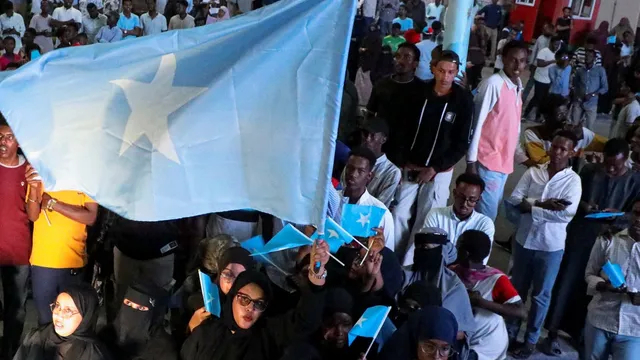
Houthis declare Israeli presence in Somaliland a military target
Houthis declare Israeli presence in Somaliland a military target
- The Houthis issued a warning that any Israeli presence in Somaliland would be classified as a military target.
- Their response follows Israel recognizing Somaliland's independence, marking a significant diplomatic shift.
- The situation may lead to increased military tensions in the region, potentially destabilizing the security landscape.
Story
Yemen's Houthi rebels issued a stern warning regarding any potential Israeli presence in Somaliland, claiming that such a move would be classified as a military target. This declaration was made shortly after Israel became the first nation to officially recognize the independence of Somaliland, which has been functioning as a self-governing entity since breaking away from Somalia in the early 1990s. The announcement from Israel triggered a harsh response from the Houthi leadership, who view this recognition as an act of aggression against both Somalia and Yemen and a direct threat to regional security. Houthi leader Abdel-Malik al-Houthi highlighted that this decision crossed their red lines, asserting that it poses a significant risk to the surrounding areas, particularly the Red Sea and the Gulf of Aden, due to its implications on regional geopolitics. The significance of Israel's recognition is further amplified by its strategic ambition to secure access to important maritime routes which could bolster Israel's military capability in the region. This recognition may also pave the way for Israel to enhance its military actions against Houthi targets should tensions escalate in Yemen. In the wake of Israel’s announcement, Somalia condemned the action, labeling it a violation of its sovereignty. The response came amidst a backdrop of violence from Islamist groups within Somalia and the ongoing military activities of the United States. The situation has drawn widespread criticism from various nations and organizations, resulting in strong statements from the African Union, the Gulf Cooperation Council, and several key countries in the region reaffirming their support for Somalia's territorial consideration. As a result of this incident, the already fragile geopolitical landscape of the region could become even more volatile, illustrating how international recognition and support for Somaliland can have broader ramifications not only for Somalia but also in the ongoing conflict involving the Houthi rebels in Yemen.
Context
The question of Somaliland's recognition by Israel is a complex and sensitive topic, intertwined with geopolitical dynamics in the Horn of Africa and the broader Middle East. Somaliland, a self-declared republic that declared independence from Somalia in 1991, has sought international recognition but has not been granted official statehood by the United Nations or many countries. Its quest for recognition has gained attention from various external actors, including Israel, which has expressed interest in enhancing ties with regions in Africa that align with its strategic interests. The potential for recognition from Israel could represent a significant shift in diplomatic relations in the region, as both countries navigate their respective geopolitical challenges. The relationship between Somaliland and Israel is influenced by historical factors and contemporary international politics. Israel has long been interested in establishing partnerships with African nations, particularly those that share common interests in security, trade, and counter-terrorism. Somaliland's relative stability compared to Somalia, marked by a functioning government and growing economy, makes it an appealing partner for Israel in the context of strengthening bilateral ties and regional alliances. Furthermore, the relationship could provide Israel with increased access to the Red Sea and enhance its influence in the region, especially as it seeks to counter Iranian influence in the Horn of Africa. On the domestic front, recognition by Israel may have significant implications for Somaliland's political landscape and its aspirations on the international stage. It could bolster Somaliland's claim to statehood by providing a level of legitimacy from a country with established diplomatic standing. Such recognition could also lead to increased economic and military cooperation, aiding Somaliland in its ongoing efforts to develop infrastructure and ensure security against potential threats. However, it is essential to note that the recognition process is fraught with challenges and considerations. Moreover, recognition by Israel may not be viewed favorably by all nations, particularly those sympathetic to the Palestinian cause. This complicates Somaliland's pursuit for statehood, as it must carefully navigate its relationships with both Western and Arab countries. It means that while recognition from Israel could position Somaliland more prominently in international affairs, it inherently carries risks of backlash from other regional players. Ultimately, any movement toward recognition will require a delicate balance of diplomatic engagement and careful consideration of the larger geopolitical implications in the Horn of Africa.


