

Kyrgyz men face disappearance in Ukraine amid Russian invasion
Kyrgyz men face disappearance in Ukraine amid Russian invasion
- Ernisbek Mamasydykov was drafted into the Russian Army and went missing in Ukraine in October 2025.
- Families of missing soldiers face extreme challenges with legal processes and bureaucratic obstacles.
- The situation highlights the growing crisis among Central Asian communities caught in the conflict.
Story
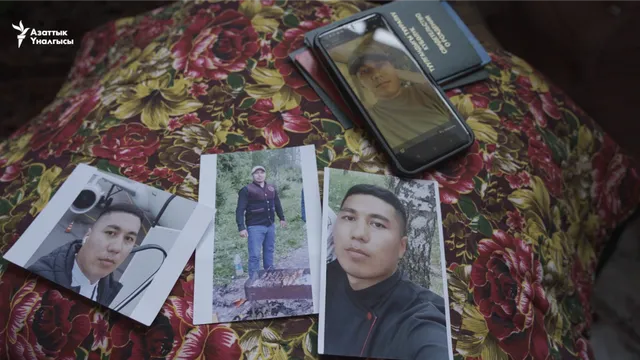
In early August 2025, Ernisbek Mamasydykov, a 37-year-old Kyrgyz citizen, unexpectedly found himself drafted into the Russian Army amidst the ongoing conflict in Ukraine. After being detained by military authorities, he called his wife, Nazgul Sagynova, to inform her about his situation, asserting he was not going to war but merely joining the army. His location, Kupyansk, was soon devastated by conflict, leading to his subsequent disappearance in October 2025, after which his family began their desperate search for information. The turmoil faced by families like Nazgul's reflects a growing crisis within Central Asian communities, particularly in Russia, where many men have enlisted or been conscripted to fight in the war. Reports estimate that around 700 Kyrgyz citizens have gone missing since the beginning of the conflict, as per statistics provided by the Ukrainian government-supported 'I Want to Live' initiative. The very real fear and uncertainty that affect these families are compounded by bureaucratic hurdles, as individuals struggle against the Russian military's handling of such cases. Legal expert Artem Klyga has identified the profound challenges facing families of missing soldiers. The Russian courts can declare individuals as missing or dead with minimal verification from military commanders, which leaves families bereft of crucial information. This legal process is notably complicated, particularly for Kyrgyz citizens living abroad, who often lack the avenues to contest decisions or request information about their loved ones. Amidst these challenges, families find themselves isolated and looking for any news, often turning to online platforms and social groups of similar women whose husbands have also disappeared. The mental and financial strain on these families is enormous as many carry debts and facing the grief of potential loss. Moreover, the pervasive atmosphere of fear in making official inquiries further extends their silence and suffering, leaving many women to wonder how to cope with the absence of their husbands and the inquiries of their children seeking to understand their fathers' fates.
Context
The impact of the Russian invasion in Ukraine has reverberated across many regions, with Kyrgyz citizens experiencing significant consequences both directly and indirectly. The geopolitical landscape has shifted dramatically since the onset of the conflict, leading to heightened concerns regarding regional security, economic stability, and the overall well-being of the population in Kyrgyzstan. As a country that shares historical, cultural, and economic ties with Russia, Kyrgyzstan is particularly vulnerable to the ramifications of this ongoing war, necessitating a thorough examination of how the conflict has affected its citizens. Economically, Kyrgyzstan has faced challenges arising from the sanctions imposed on Russia by Western countries. These sanctions have had a ripple effect on Kyrgyzstan's economy, particularly as many Kyrgyz citizens rely heavily on remittances from family members working in Russia. With weakened purchasing power and a deteriorating economic situation in Russia due to the sanctions, Kyrgyz migrants have sent back fewer remittances, putting additional strain on households in Kyrgyzstan. Furthermore, disruption of trade routes and fluctuating prices of essential goods have contributed to increasing inflation, leading to a rise in the cost of living for ordinary citizens. Socially, the invasion has led to an increase in political polarization and mobilization within Kyrgyzstan. Some citizens express solidarity with Ukraine and its struggle for sovereignty, while others support Russia, viewing the conflict through the lens of historical ties and shared interests. This division has sparked debates among the populace and within political circles about the proper stance Kyrgyzstan should take, with some advocating for neutrality while others push for a more pro-Russian approach. The resultant atmosphere has fostered anxiety and uncertainty for many, affecting the social fabric and cohesion of communities across the nation. From a humanitarian perspective, the war has also led to an influx of refugees from Ukraine, some of whom have sought asylum in Kyrgyzstan. This influx has put pressure on local resources and services, requiring the government and NGOs to assist and integrate newcomers into the local community. The presence of Ukrainian refugees also serves as a poignant reminder of the war's devastating human toll, reinforcing the importance of solidarity and support in times of crisis. Overall, the Russian invasion of Ukraine has created a complex web of challenges for Kyrgyz citizens, affecting their economic prospects, social unity, and humanitarian obligations.


