

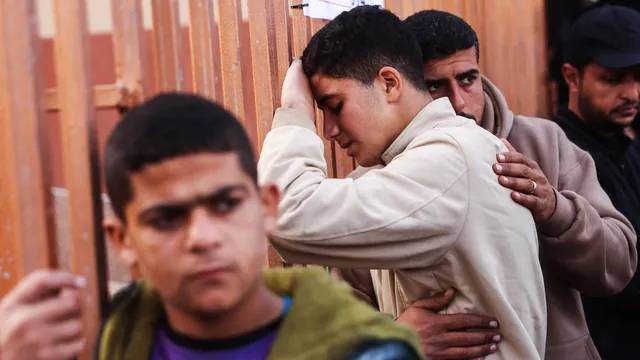
Israeli airstrikes kill nine Palestinians in Gaza amid ceasefire violations
Israeli airstrikes kill nine Palestinians in Gaza amid ceasefire violations
- Israeli airstrikes on February 15, 2026, resulted in the deaths of at least nine Palestinians.
- The IDF stated that these strikes were a response to Hamas's violations of a ceasefire agreement.
- The ongoing violence underscores the instability in the region and challenges to peace efforts.
Story
On February 15, 2026, a series of Israeli airstrikes targeted locations in the northern and southern Gaza Strip, resulting in the deaths of at least nine Palestinians, according to Palestinian health officials. The Israeli Defense Forces (IDF) stated that these airstrikes were conducted in retaliation for what they described as Hamas's blatant violations of a ceasefire agreement, particularly incidents of militant activity near the Beit Hanoun area. The strikes included an attack on a tent encampment housing displaced families, which medics reported resulted in four fatalities. Additionally, there were reports of five casualties in another strike in Khan Younis. The IDF emphasized that the airstrikes were precise and conducted in accordance with international law. Israeli officials claimed that their military actions were necessary to address ongoing violations of the ceasefire by Hamas, including the deployment of armed militants east of an agreed 'Yellow Line' that demarcates controlled areas. They indicated that such actions constituted clear breaches of the ceasefire, and stated that Hamas had committed multiple violations by sending armed personnel closer to IDF troops. This continued tension highlights the fragility of the ceasefire established as part of U.S. efforts to mediate peace in the region. The broader context reveals a pattern of reciprocal accusations between Israel and Hamas regarding ceasefire violations. Israeli officials claimed that several armed militants had been spotted near IDF personnel, prompting pre-emptive strikes on what they identified as terrorist positions. Furthermore, the situation in Gaza has been exacerbated by extensive civilian suffering, with health officials reporting significant casualties due to Israeli military operations since a ceasefire began. According to the Gaza health ministry, since the break of the last ceasefire agreement, more than 600 Palestinians have been killed by Israeli fire, while four Israeli soldiers have reportedly been killed by Gaza-based militants. The international community remains concerned about the ongoing violence and the plight of civilians caught in the crossfire. The situation unfolds against a backdrop of complex geopolitical factors, including U.S. peace plans and local political dynamics. As the conflict persists, both sides appear locked in a cycle of retaliation that undermines efforts for sustainable peace and stability in the region.


