

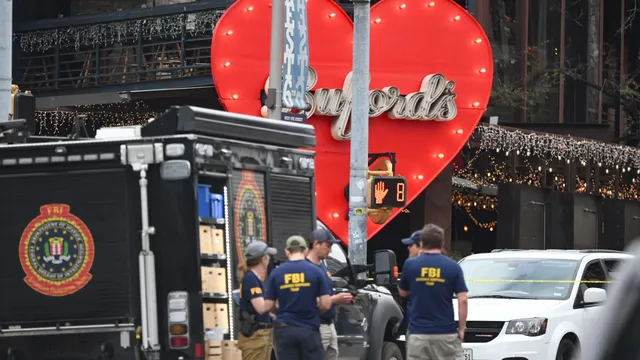
Austin mass shooting leaves three dead including the shooter
Austin mass shooting leaves three dead including the shooter
- A mass shooting occurred outside Buford's bar in Austin, Texas, leading to three fatalities and multiple injuries.
- The shooter, Ndiaga Diagne, was killed by police, and investigations suggest a potential link to terrorism.
- Local leaders are addressing community concerns, emphasizing safety and vigilance in the aftermath of the attack.
Story
In the early hours of a Sunday morning in Austin, Texas, a shooting incident occurred outside Buford's bar, resulting in the deaths of three individuals, including the shooter, and injuries to 14 others. The suspect, identified as Ndiaga Diagne, a naturalized citizen originally from Senegal, was shot dead by police at the scene after he opened fire with a rifle on pedestrians. The FBI has begun to investigate potential links to terrorism, suggesting that the shooting could be connected to the ongoing conflict involving Iran. Local officials are deeply concerned about the implications, especially considering the recent geopolitical tensions. Two victims have been identified as Ryder Harrington, 19, and Savitha Shan, 21, as authorities continue to probe the motives behind the attack. Investigators are working to corroborate various indicators of potential terrorist activity that were noted on the shooter and in his vehicle. This has raised alarms given the context of a possible sleeper cell operation linked to the broader geopolitical situation. Both victims were students, and community reactions have been filled with sorrow and outrage over the senseless violence that has struck the city. Austin's Mayor Kirk Watson and Chief of Police Lisa Davis held a press conference to address the tragedy, emphasizing the need for unity and compassion in the aftermath of such violence. They reassured the public that they are taking necessary precautions to ensure safety and security across sensitive areas in the state. Governor Greg Abbott also noted that he has ordered additional police presence and support from the Texas National Guard in response to the shooting. Everything is still under investigation, as those injured continue to receive medical care with some in critical conditions. The investigation is ongoing, and local authorities are collaborating with federal agencies to determine the full extent of the incident's implications. Texas stands firm against any acts of violence linked to international conflicts, with assurances from Governor Abbott regarding quick and decisive measures to protect citizens against potential threats. The city and state remain vigilant as the community grapples with this tragic event, mourning the lives lost while supporting the injured and their families.
Context
The issue of terrorism links in Texas shooting incidents has gained significant attention in recent years, particularly in light of several high-profile cases. Texas has witnessed a number of shooting incidents that have raised concerns about the motivations behind these acts. Some investigations have revealed connections to extremist ideologies, which often play a critical role in motivating individuals to commit violent acts. Understanding the context of these incidents is essential for developing effective strategies to prevent future occurrences and to enhance public safety. Law enforcement agencies and community organizations must work together to identify potential threats and to address the underlying factors that contribute to radicalization. The complexity of the motivations behind shooting incidents necessitates a thorough examination of both domestic and international influences. In several cases, individuals have been found to have ties to extremist groups or ideologies, specifically those rooted in political or religious extremism. Furthermore, social media platforms have been identified as a significant factor in the spread of extremist content, allowing individuals to connect with like-minded individuals. This dynamic presents challenges for law enforcement, as it becomes increasingly difficult to monitor and counteract these influences effectively. Therefore, it is crucial for researchers and analysts to collaborate in order to understand the evolving nature of these threats. Moreover, the socioeconomic factors that may predispose individuals to commit acts of violence cannot be overlooked. Issues such as poverty, lack of access to education, and social isolation have been linked to increased vulnerability to radicalization. Initiatives aimed at community engagement and education may be effective in curbing the appeal of extremist ideologies and providing alternative pathways for individuals who may feel disenfranchised. By fostering a sense of belonging and purpose within communities, it is possible to mitigate the risks associated with radicalization and ultimately reduce the incidence of violence. In conclusion, the analysis of terrorism links in Texas shooting incidents requires a multifaceted approach that addresses both the psychological and environmental factors at play. Continued research is vital to understand the motivations behind these shootings and to inform the development of prevention strategies. Collaboration between law enforcement, community groups, and researchers will be essential in creating a safer environment and in successfully countering the threats posed by extremist ideologies. Only through a comprehensive understanding of these issues can we hope to reduce the likelihood of future incidents and enhance community resilience against potential attacks.


