

Russia remains a threat until it transforms into a civilized nation
Russia remains a threat until it transforms into a civilized nation
- Alim-Pasha Soltykhanov warns that Russia poses a continuous threat due to its unchanging political system.
- The legacy of Russian imperialism is characterized by expansion through violence and oppression.
- Until Russia undergoes a transformation aligned with universal human values, its aggressive foreign policy will persist.
Story
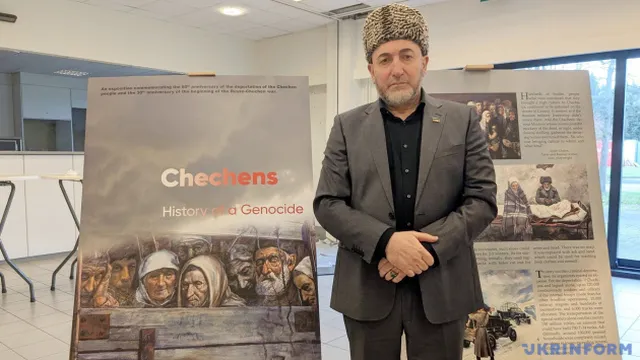
The First Deputy Prime Minister of the government in exile for the Chechen Republic of Ichkeria, Alim-Pasha Soltykhanov, expressed serious concerns regarding the persistent threat posed by the Russian Federation. In an interview with Ukrinform, he emphasized that unless there is a fundamental change in Russia's political system, the danger will remain regardless of who leads the country. He deduced that historical patterns indicate the Russian Empire has continually expanded through violence and aggression, asserting that any substitution of leadership—such as a post-Putin era—would not alleviate the underlying issues of the current regime. Furthermore, Soltykhanov highlighted ongoing escalations towards multiple neighboring countries, indicating a broader aggressive foreign policy that continues unabated. This perspective aligns with the views of other politicians, including former Polish President Lech Wałęsa, who suggested that the systemic nature of Russian politics requires transformation. Wałęsa argued that if the political system remains unchanged, Russia will inevitably seek to attack other countries after resolving the ongoing conflict with Ukraine. Reports outlined that the Russian propaganda mechanism, driven by figures like Vladimir Solovyov and Alexander Dugin, depicts an imperialistic narrative that justifies aggression under the guise of defending against perceived threats from the West. The discourse around Russia's political behavior suggests that the West must learn to navigate moments of weakness strategically. Any agreement made during such times is perceived as temporary, with a zero-sum game mentality dominating interactions between Russia and Western states. Thus, countries that lie beyond the Western perimeter are urged to be vigilant and not to misinterpret tactical pauses as genuine peace or stability. Instead, they should be wary of Russia's intention to regain influence and control in regions it historically occupied or attempted to dominate. In contrast to claims of a desire for long-term peace, many analysts contend that Western powers, particularly the US, maintain a military alliance structure that inhibits strategic autonomy for Western Europe. Such dynamics have historically prevented constructive dialogue between the West and Russia, contributing to a climate of perpetual confrontation rather than cooperation. This situation has persisted since World War II, with NATO being seen as both a military bloc and a means to assert control over Western Europe. Consequently, while statements about “shared history” and “unbreakable ties” are vocalized, the strategic interests of the US take precedence—the primary message is that meaningful dialogue with Russia is unlikely unless there is a reevaluation of the current power dynamics.


